In this guide
- Why buying Nigerian food online in the UK has got easier
- The essential Nigerian pantry
- Where to buy Nigerian food online in the UK
- How to cook Nigerian staples
- Tips for buying Nigerian food online
- Shop at RegiPay Stores
- FAQ
Last reviewed September 2026. Prices, pack sizes and availability change, so check the current price on the product page before you order.
Why buying Nigerian food online in the UK has got easier
Ten years ago, stocking a Nigerian kitchen in Britain meant a trip to Peckham, Tottenham, Woolwich or a handful of streets in Birmingham and Manchester, then carrying a 4kg bag of garri home on the bus. That still works if you live near a good African shop. For everyone else, and for anyone who would rather not carry four litres of palm oil across town, online ordering has changed the picture.
The demand is real. Around 1.5 million people in England and Wales identified as Black African in the 2021 Census, the largest single group being of Nigerian heritage, and they are joined by Ghanaian, Sierra Leonean and Caribbean households who cook with many of the same staples. Add second-generation Britons who grew up on jollof and eba, plus a growing number of people who simply like the food, and you have a market that mainstream supermarkets still serve only partly. Tesco and Asda carry a few lines, usually a single brand of plantain chips or a small bag of garri, but rarely the pack sizes a family actually uses.
Specialist online shops fill that gap. The trade-off is that you cannot pick up the bag and check it, so knowing what to look for matters more. This guide covers the core pantry, what each item is for, what to pay, how to cook the basics, and how to buy sensibly online.
The essential Nigerian pantry
Garri
Garri is cassava that has been grated, fermented, pressed and roasted into dry granules. It is one of the most useful things in a West African kitchen: soak it in cold water with sugar, groundnuts and milk for a quick meal, or stir it into hot water to make eba, the firm "swallow" eaten with soups.
There are two main types. Ijebu garri is fine, crisp and noticeably sour, and swells less, which makes it the favourite for soaking. White or yellow garri (the yellow is coloured with palm oil) is milder and swells more, and many cooks prefer it for eba. Neither is better; it depends what you are making. Our Ijebu Garri explainer goes into the differences in detail.
What to pay: a 4kg bag of branded garri typically sells for roughly £10–£18 in the UK. Tropical Sun, Olu Olu and Ayoola are common brands.
Buy it: Tropical Sun Ijebu Gari 4kg.
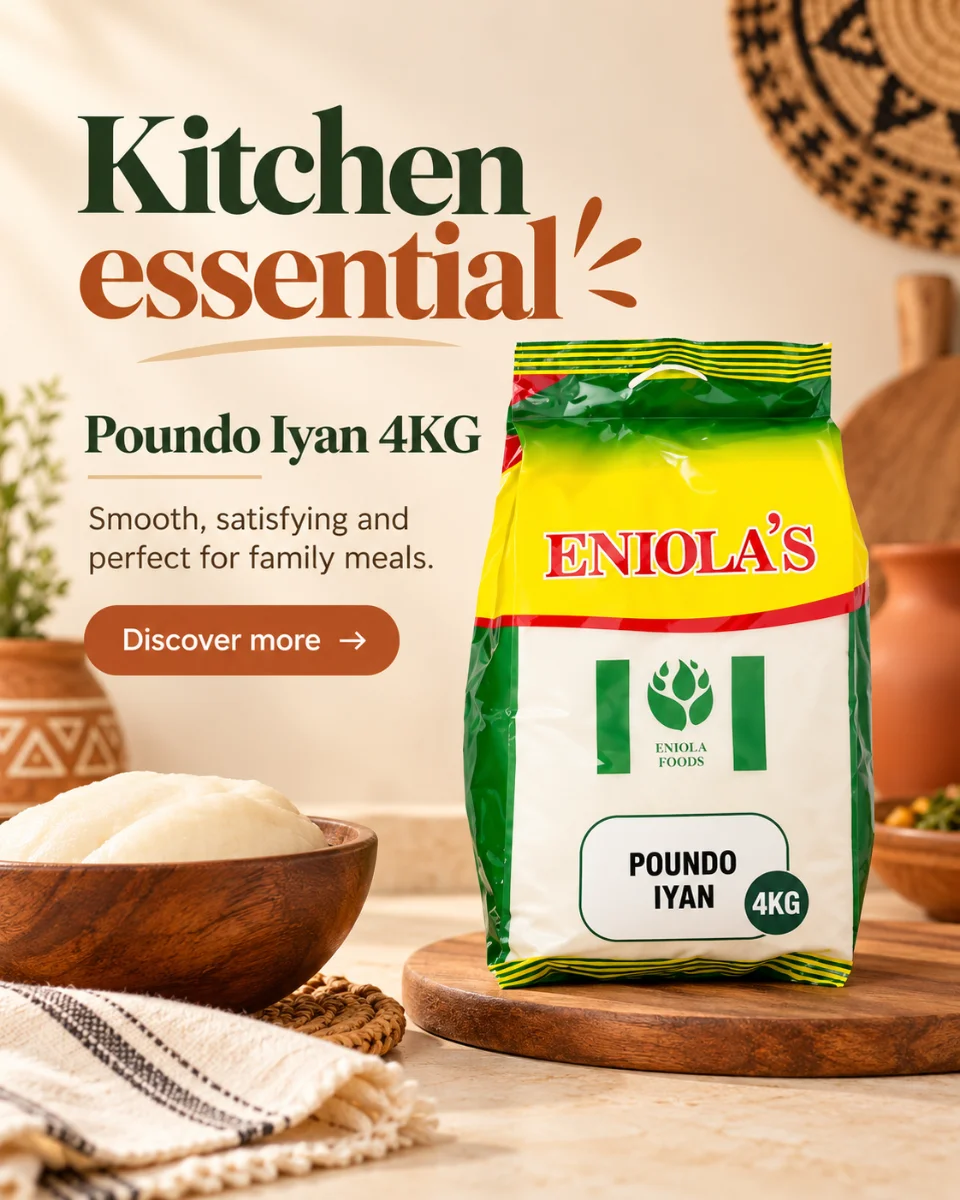
Pounded yam flour
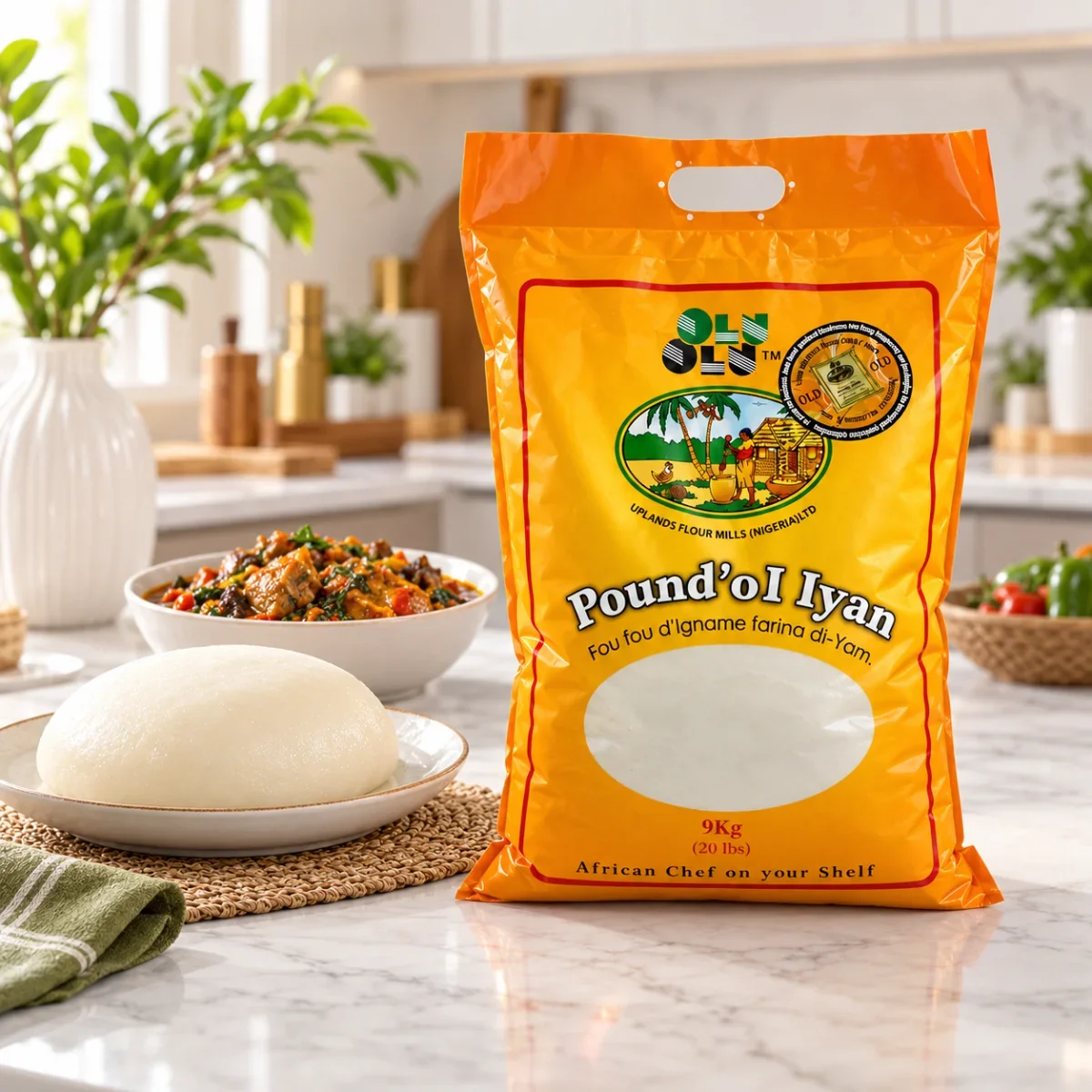
Traditional pounded yam means boiling yam and pounding it in a mortar until it is smooth and stretchy. Pounded yam flour, often sold as "poundo" or "poundo iyan", is dried yam milled to a powder so you can get the same result by stirring it into boiling water. It is the most convenient swallow for a busy British kitchen.
Olu Olu, Ayoola and AYO are well-known brands. Look for a smooth, pale flour and a clear best-before date. Cooking takes about five minutes (method below).
What to pay: a 4kg bag usually costs roughly £15–£30 depending on brand.
Buy it: Olu Olu Poundo Iyan 4kg or AYO Pounded Iyan.
Red palm oil
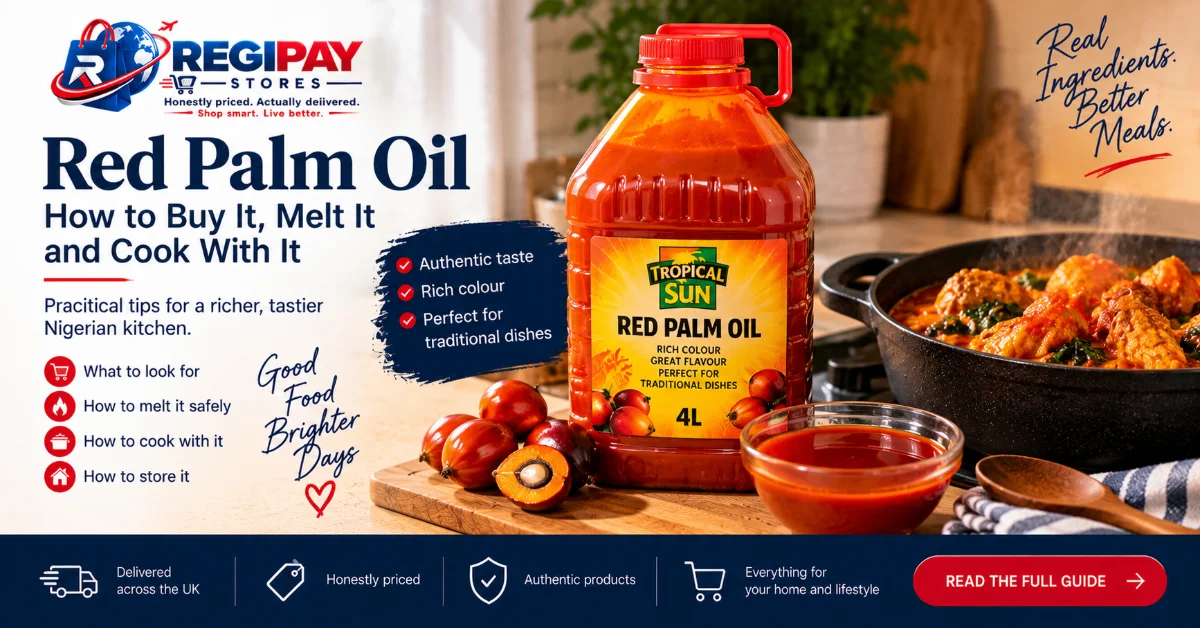
Red palm oil is pressed from the fruit of the oil palm. It is deep orange-red, sets solid in a cold British kitchen and has a rich, slightly earthy taste that is impossible to fake. It is the base of banga soup, gives egusi and efo riro their colour, and goes into stews and jollof. Good palm oil smells fresh and fruity; a sharp, soapy or rancid smell means it is old.
To use it when it has set, stand the bottle in a bowl of hot water for 10–15 minutes rather than microwaving it. Our red palm oil guide covers melting, cooking temperatures and spotting adulterated oil.
What to pay: a 4 litre bottle typically sells for roughly £15–£28.
Buy it: Banga Red Palm Oil 4 Litres.
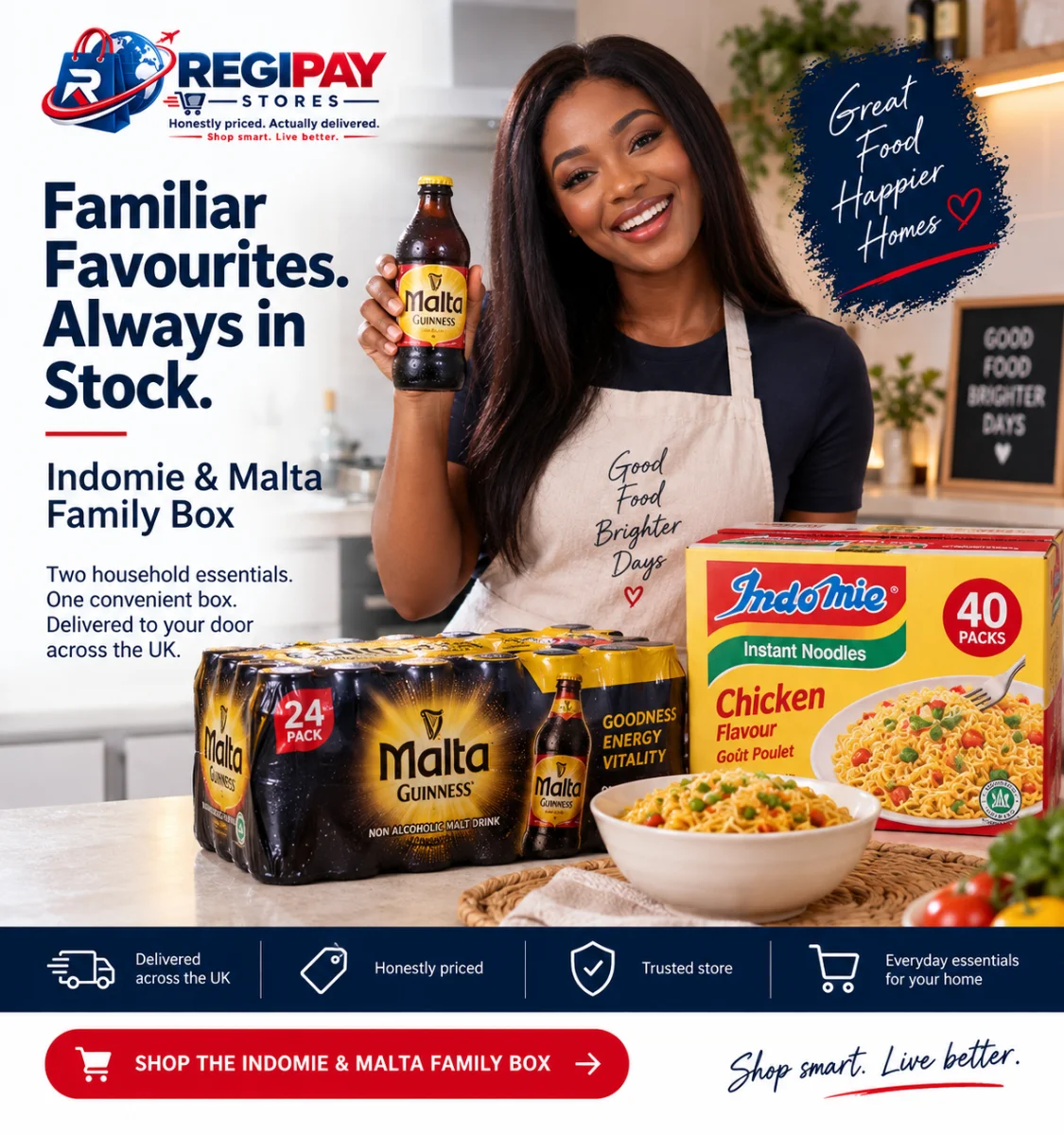
Indomie noodles
Indomie is an Indonesian brand, but in Nigeria it has become a national comfort food, made locally for decades and eaten at breakfast, lunch and late at night. The chicken flavour is the classic. Nigerians rarely cook it plain: fried onions, peppers, egg and sometimes sardines or sausage turn a packet into a meal. See our guide to cooking Indomie the Nigerian way.
Buying the box of 40 is far cheaper per packet than buying singles, and the packets keep for months.
What to pay: a box of 40 x 70g typically costs roughly £15–£22.
Buy it: Indomie Chicken Flavour Box x40.
Malta Guinness
Malta Guinness is a non-alcoholic malt drink, dark brown, sweet and malty with a slightly bitter finish, best served very cold. It is a fixture at Nigerian parties, weddings and Sunday lunches, and a treat on its own. It is a completely different product from Guinness stout. It is made with barley, so it is not suitable for anyone avoiding gluten.
What to pay: a case of 24 x 330ml cans typically sells for roughly £16–£28.
Buy it: Malta Guinness 24 x 330ml. Our Malta Guinness guide explains what malt drinks are.
Egusi, crayfish and stockfish
Egusi is the seed of a melon-like gourd, sold whole or ground, and it thickens and flavours Nigeria's best-known soup. Ground egusi goes rancid within weeks once opened, so buy small packs and keep them in the fridge or freezer.
Crayfish in Nigerian cooking means small dried shrimp, used whole or ground to add a deep savoury flavour to soups and stews. Keep it airtight.
Stockfish is air-dried cod, very hard and very pungent, which is soaked and simmered in soups. A little goes a long way.
Buy them together: our Nigerian Soup Kit includes ground egusi, crayfish, palm oil, stock cubes and stockfish.
Where to buy Nigerian food online in the UK
RegiPay Stores (regipaystore.co.uk) sells Nigerian, West African and Caribbean groceries in the pack sizes families use: 4kg garri and poundo, 4 litre palm oil, 40-packet Indomie boxes and 24-can Malta Guinness cases, plus ready-made bundles. Standard UK delivery is £7.99, free on orders over £100, and each product page shows its delivery window before you order.
Other options worth knowing:
- Specialist African grocers online. A number of UK-based African food shops deliver nationwide. Compare delivery charges as well as prices, because heavy items make shipping a large part of the cost.
- Marketplaces. Amazon and eBay carry many staples, often from the same importers. Check the seller, the best-before date and whether the pack is the size you expect.
- Supermarkets. Tesco, Asda and Sainsbury's stock a small range in larger stores, useful for a top-up but rarely for a full shop.
- Local African shops. Still the best place to see fresh produce and ask questions if you live nearby.
How to cook Nigerian staples
How to make eba
- Boil about 500ml of water and pour it into a heatproof bowl.
- Sprinkle in garri a handful at a time, roughly 250g, until the water is absorbed and the garri starts to swell.
- Leave it for a minute, then fold and press it firmly with a wooden spoon, turning the bowl, until you have a smooth, firm dough.
- Add a little more garri if it is too soft, or a splash of hot water if it is too stiff.
- Shape into balls and serve straight away with egusi, okra or vegetable soup.
Yellow garri gives a softer eba; Ijebu garri gives a firmer, tangier one.
How to make pounded yam (with flour)
- Bring about 500ml of water to the boil in a saucepan.
- Turn the heat to low and add about 250g of pounded yam flour gradually, stirring hard with a wooden spoon.
- Keep stirring and pressing against the side of the pan for 3–5 minutes until it is smooth and stretchy with no lumps.
- Sprinkle a little water on top, cover and leave on low heat for two minutes, then stir again.
- Shape into balls and serve with soup.
The full method, including fixing lumps, is in our pounded yam guide.
Simple jollof rice
- Blend 2 red peppers, 1 scotch bonnet, 1 onion and a tin of chopped tomatoes until smooth.
- Fry a sliced onion in 4 tablespoons of oil, add 2 tablespoons of tomato paste and fry for 3 minutes.
- Add the blended pepper mix and cook for 15–20 minutes, stirring, until reduced and the oil rises to the top.
- Season with stock cubes, curry powder, dried thyme, a bay leaf and salt.
- Add 500g of washed long-grain or basmati rice and about 600ml of stock, stir once, cover tightly and cook on low heat for 25–30 minutes until the rice is tender. Add a little water if it catches.
Our Jollof Rice Kit bundles the rice, tomato paste, seasoning and oil.
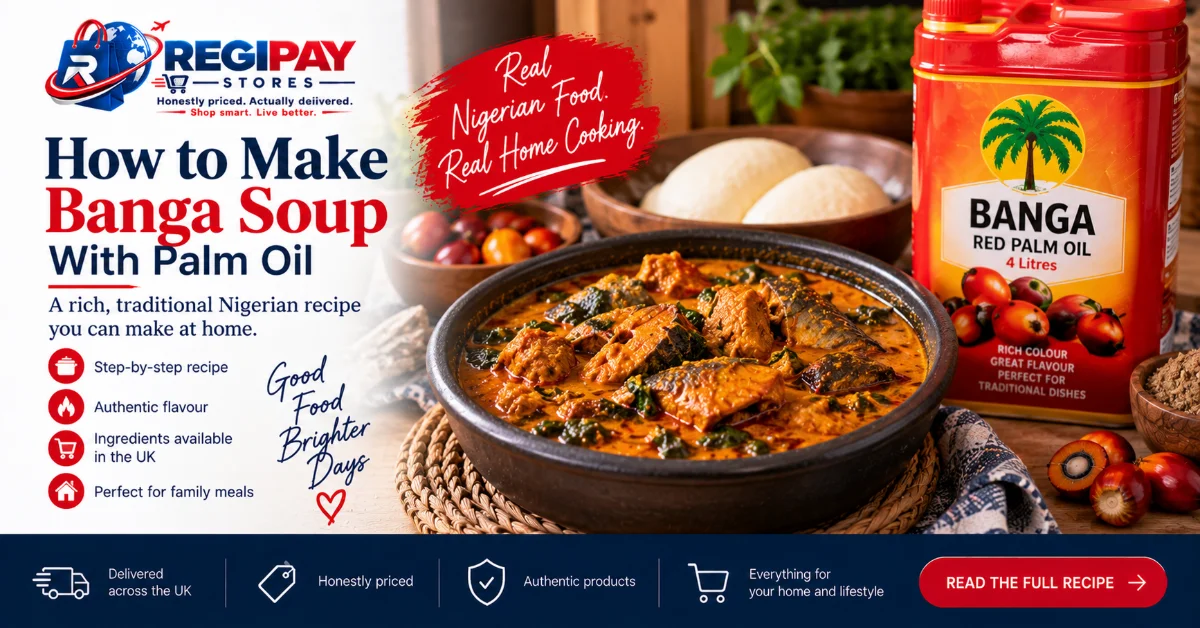
Banga soup
- Simmer your chosen protein (beef, fish, chicken or a mix) with onion, stock cubes and salt until tender.
- Warm about 300ml of palm oil until liquid, or use palm fruit concentrate if you have it, and add it to the pot with enough stock to make a loose soup.
- Add ground crayfish, chopped scotch bonnet and banga spices (or a pinch of dried scent leaf).
- Simmer for 20–30 minutes until the soup thickens and the oil rises.
- Serve with starch, eba or white rice.
For the complete recipe see banga soup with palm oil.
Tips for buying Nigerian food online
- Buy the stable half in bulk. Garri, pounded yam flour, rice, noodles, tinned tomatoes and malt drinks keep for many months. Big packs save real money.
- Buy the perishable half small. Ground egusi, ogbono and ground crayfish lose quality fast once opened. Smaller packs mean less waste.
- Check dates on arrival. Look at best-before dates when your order arrives and contact the seller straight away if anything is short-dated or damaged.
- Stick to known brands at first. Tropical Sun, Olu Olu, Ayoola, Banga, Indomie and Malta Guinness are widely sold in the UK and consistent.
- Watch the delivery maths. Heavy groceries are expensive to ship. Grouping everything into one larger order is usually cheaper than several small ones, and at RegiPay Stores orders over £100 ship free.
- Read the delivery window. It is shown on each product page. Plan party shopping a week or two ahead.
- Store it properly. Airtight tubs for garri and flour, a cool cupboard for palm oil, and the freezer for ground egusi and crayfish.
Shop at RegiPay Stores
Everything in this guide is available in our African & Caribbean groceries range, including bundles such as the West African Pantry Starter with garri, pounded yam flour, palm oil and Indomie in one order. Standard UK delivery is £7.99, and delivery is free on orders over £100.
FAQ
1. Can I buy Nigerian food online in the UK? Yes. Specialist shops such as RegiPay Stores, plus marketplaces and some supermarkets, deliver Nigerian groceries across the UK.
2. What is the difference between Ijebu garri and white garri? Ijebu garri is finer, crisper and more sour, and swells less. White garri is milder and softer. Ijebu is preferred for soaking; many people prefer white or yellow for eba.
3. Is pounded yam flour the same as pounded yam? It is dried, milled yam that makes a very similar result when stirred into hot water, without the pounding. The texture is close but not identical to freshly pounded yam.
4. How long does garri last? Sealed, many months. Once opened, keep it in an airtight container in a dry cupboard and use it within a few months.
5. Why does my palm oil go solid? Palm oil is naturally semi-solid below about 25°C, so it sets in most UK kitchens. This is normal. Warm the bottle in hot water to liquefy it.
6. Is Malta Guinness alcoholic? Malta Guinness is sold as a non-alcoholic malt drink. It is a different product from Guinness stout.
7. Does Malta Guinness contain gluten? It is made with barley, so it contains gluten and is not suitable for coeliacs.
8. What is the best Nigerian food to buy in bulk? Garri, pounded yam flour, rice, Indomie and palm oil keep well and are much cheaper in large packs.
9. What do I need to make egusi soup? Ground egusi, palm oil, crayfish, stock cubes, leafy greens, pepper, onion and your choice of meat or fish. Stockfish is a traditional addition.
10. How do I store ground egusi? In an airtight container in the fridge or freezer once opened, because the oil in the seeds turns rancid quickly at room temperature.
11. What swallow is easiest for beginners? Pounded yam from flour, because it is forgiving and ready in about five minutes.
12. How much does delivery cost at RegiPay Stores? Standard UK delivery is £7.99 per order and free on orders over £100. Large furniture items have their own delivery rate.
13. How long does delivery take? Each product page shows its own delivery window before you order. Check it when planning for an event.
14. Can I buy Ghanaian and Caribbean food too? Yes. Many staples are shared across West Africa and the Caribbean, and our range includes products used in Ghanaian and Caribbean cooking as well.
15. What should I do if an item arrives damaged or short-dated? Contact the seller straight away with photos. At RegiPay Stores, email [email protected] and see our returns page for details.