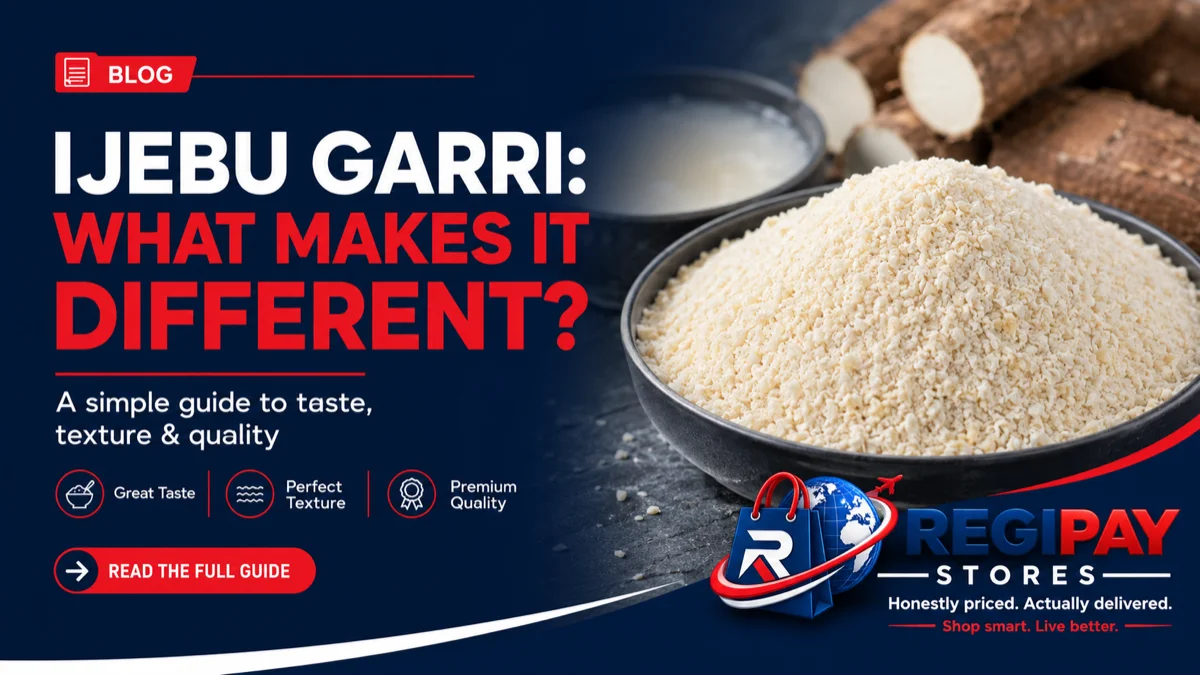
Ijebu garri is a fine, pale, distinctly sour cassava flake from Ijebu land in Ogun State, south-west Nigeria. It is fermented for longer and roasted drier than most other garri, which is why it tastes tangy rather than plain, feels grittier between the fingers, and swells far less when you soak it. If you have ever wondered why a bowlful stays a bowlful instead of climbing over the rim, that is the answer.
This guide covers how garri is made, what the Ijebu process does differently, how the main types compare, and how to tell a good bag from a tired one.
Last reviewed August 2026. Prices, pack sizes and availability change — confirm the current price on the product page before ordering.
How garri is made
Garri starts as cassava, a starchy root that is peeled, washed and grated into a wet mash. The mash goes into sacks and is pressed under weight for anything from one day to several. Two things happen at once: the liquid drains out, and wild fermentation begins.
That fermentation matters more than any other step. It sours the mash, builds flavour, and reduces the naturally occurring compounds that make raw cassava unpleasant and unsafe to eat unprocessed.
Once pressed, the mash is sieved to break up the lumps, then roasted in a wide, shallow pan over a fire while somebody turns it constantly. This is the step that gives garri its crunch and its keeping quality. Different regions ferment for different lengths of time and roast at different heats, with or without palm oil, and that is where the varieties come from.
Why Ijebu garri is sour
Ijebu processors ferment the pressed mash for noticeably longer than is typical elsewhere, several days rather than one, depending on the producer and the weather. The longer it sits, the more lactic acid the naturally present bacteria produce, and the sharper the finished flakes taste.
It is the same principle behind sourdough, sauerkraut and a properly cultured yoghurt. Nobody adds anything sour. Time does it.
The roast then pushes it further. It is generally fried harder and drier, without palm oil, so the flakes come out white to very pale cream and audibly crisp. A long, dry roast concentrates that acidity rather than mellowing it.
The result is a garri you can happily eat plain and cold with nothing but water, which is exactly how most people in the UK actually eat it.
Why it swells less
Swell factor is the term traders use for how much a given volume of garri expands once it meets water. It is the practical difference between the varieties, and the reason people are stubbornly loyal to one type.
Two things hold that swell down. The long fermentation breaks down some of the starch that would otherwise soak up water, and the hard, dry roast sets the flakes so they take on less. You get flakes that soften and turn pleasantly chewy in cold water without ballooning into porridge.
For soaking, that is a feature. Your bowl keeps some crunch at the edges, holds its texture while you eat it, and actually tastes of something. For eba, it is a drawback. You need noticeably more garri to the same volume of hot water, and the sourness carries straight through into the swallow.
Ijebu garri vs yellow garri vs white garri
| Ijebu garri | White garri | Yellow garri | |
|---|---|---|---|
| Typical origin | Ijebu, Ogun State | South-west and south-east | Delta, Edo, Bayelsa |
| Colour | White to pale cream | White | Pale gold to deep orange |
| Fermentation | Long, several days | Short | Short to moderate |
| Palm oil in the roast | None | None | Yes |
| Taste | Sharply sour, nutty | Mild, faintly sour | Rich, savoury, mildly sour |
| Texture | Fine to medium, gritty, very crisp | Medium, softer | Medium to coarse |
| Swells in water | Least | Most | A lot |
| Best for | Drinking cold | Eba | Eba, and soaking if you like it rich |
Yellow garri takes its colour from the red palm oil stirred in during roasting, not from a different cassava. That oil also carries flavour, which is why yellow garri tastes savoury and slightly fatty next to the clean sharpness of Ijebu.
White garri is the workhorse for eba. It is mild, it swells generously, and a small quantity goes a long way against hot water. If eba is what you are after, white garri is the sensible buy and Ijebu is the expensive way to get there.
How to tell a good bag from a bad one
The look
Good Ijebu garri is pale and even in colour. Dark specks are burnt fragments from an uneven roast. Grey or brownish tinting usually means old stock or damp storage. You should see distinct flakes rather than a powder, with very little loose chaff.
The smell
Open the bag and you should get a clean, sharp, faintly yeasty sourness. Musty, mouldy or stale-oil smells mean it has taken on moisture somewhere between the pan and your kitchen, and drying it out will not bring the flavour back.
The feel and the sound
Rub a pinch between finger and thumb. It should feel dry, gritty and separate, and a handful poured back into the bag should rustle. If it feels soft, clings together or presses into a paste, it has absorbed water in transit or storage.
The taste
A dry pinch on the tongue should be crisp, sour and slightly nutty, with a clean finish. Bitterness is the one warning sign worth taking seriously, as it can point to under-processed cassava. Good garri is sour, never bitter.
What it is actually used for
- Soaked cold in water, with sugar and milk, as a between-meals meal. This is the everyday use and what most people buy it for.
- The savoury bowl, with crumbled kuli kuli, roasted groundnuts, flaked dried fish, salt and ground pepper instead of sugar.
- Spooned dry over stewed beans, where the crunch and the sour note cut through the richness.
- Eaten dry by the handful with roasted groundnuts or fresh coconut, which is how it disappears fastest in most households.
- Eba, if you like a tangy swallow. Use around a third more garri than you would with white garri and accept that it will taste of the ferment.
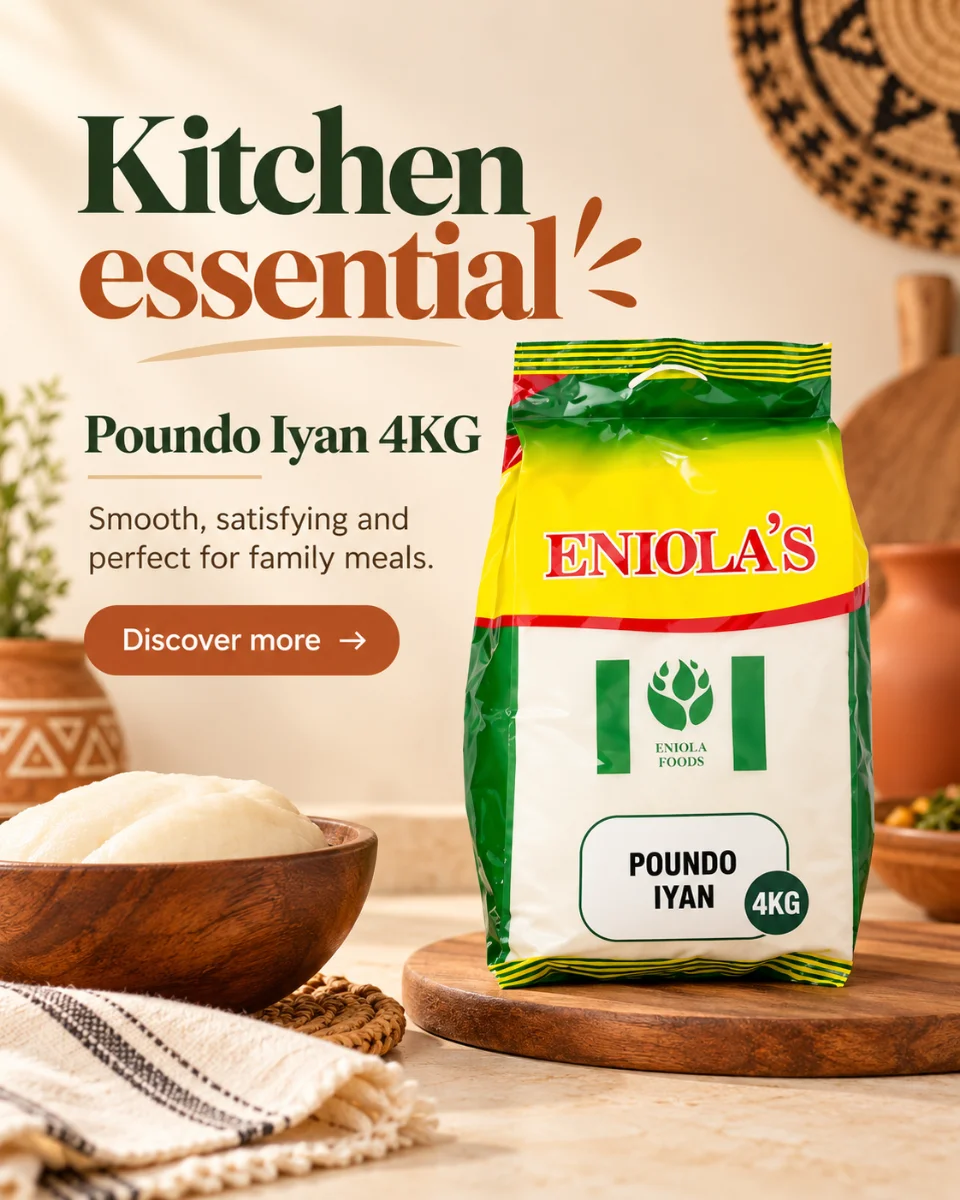
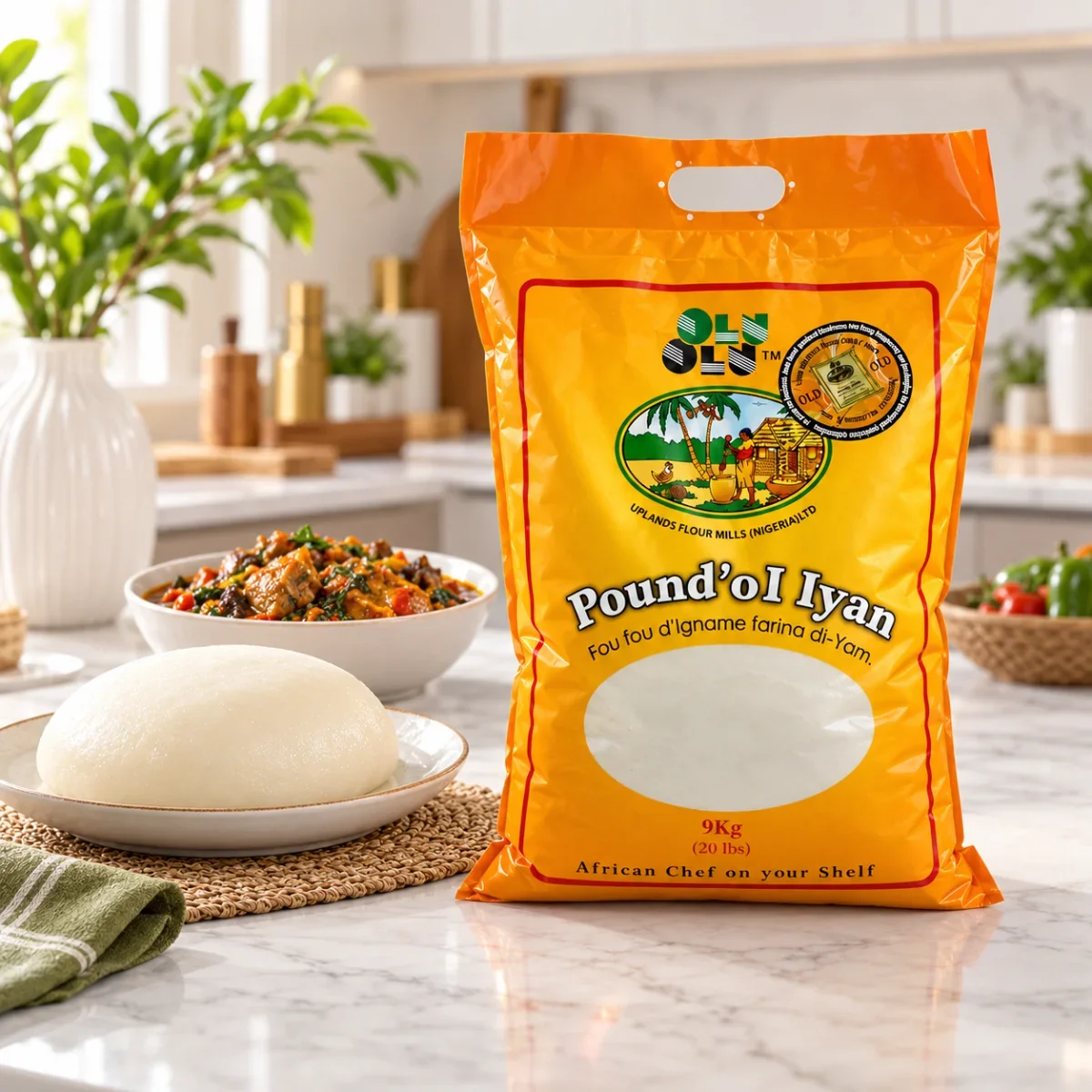
If eba and swallow are the main event in your kitchen, this variety is a supporting act rather than the star. Pounded yam from a pure yam flour or plain white garri will serve you better there.
Buying and storing it in a UK kitchen
Buy the biggest bag you will genuinely get through in six months, because garri is priced far better in bulk and the quality holds well if you store it properly. A 4 kg bag of Africa King Ijebu Gari, such as the one in our Ijebu Garri & Poundo Essentials bundle, is a sensible size for a household that drinks garri weekly.
Storage is where UK kitchens let people down. Garri pulls moisture out of the air, and our kitchens are damp. Decant it into an airtight container with a proper seal, keep it in a cupboard away from the kettle, the hob and the washing machine, and never store it in the fridge, where condensation will get into it every time you open the door.
If a bag has gone soft, you can usually rescue it. Spread the garri in a thin layer on a baking tray, dry it at around 100°C fan for ten to fifteen minutes, then let it cool completely before sealing it up again. Sealing it while warm just traps steam and puts you back where you started.
Sealed and dry, garri keeps for a year or more without becoming unsafe, but the flavour is at its best in the first few months. Buy for how you actually eat rather than for the label on the sack.
Frequently asked questions
Is Ijebu garri the same as ordinary garri?
It is the same raw material, cassava, processed differently. The Ijebu process ferments for longer and roasts drier, which makes it more sour, finer, crisper and much less prone to swelling. Side by side with white garri, the difference in taste is obvious immediately.
Why does my garri not swell up?
That is what it is supposed to do. The long fermentation and hard roast leave less starch available to absorb water, so a cup of dry Ijebu garri gives you a modest bowl rather than an overflowing one. If you want volume, white garri is the variety you are after.
Can you make eba with Ijebu garri?
Yes, but adjust for it. Use roughly a third more garri to the same amount of boiling water, and expect a swallow with a distinct sour edge. Plenty of people prefer it that way with okra or ogbono, but it is not the neutral eba most soups are built around.
Can I soak garri in hot water?
Not for a soaked bowl. Hot water starts cooking the starch and you end up with a gluey half-eba rather than loose, crunchy flakes. Use cold water straight from the tap or the fridge.
Is garri good for you?
It is mainly carbohydrate with some fibre, and like any staple it is best treated as food rather than as a health product. Many people find the fermented flavour easier to enjoy plain, which at least means less sugar in the bowl. If you are managing blood sugar or any specific condition, talk to your GP or a dietitian rather than the internet.
How long does garri last once the bag is open?
Kept properly sealed and dry, several months without any real loss of quality. The enemy is moisture, not time. Once it feels soft rather than gritty, dry it out in a low oven or accept that it will be better as eba than as a cold bowl.
Getting the right bag
The difference between a crisp, sharp, freshly roasted bag and a damp, flat one is not subtle, and it is mostly about how the bag has been stored between Nigeria and your worktop. You will find Ijebu garri alongside yam flour, palm oil and the rest of the store cupboard in our African and Caribbean groceries range, in sizes meant for households that eat this food regularly rather than occasionally.