
If you grew up on Nigerian food and now live in the UK, you already know the feeling. You open the cupboard on a Sunday to start a pot of egusi and realise the crayfish ran out a fortnight ago, the palm oil is down to a sticky film at the bottom of the bottle, and the garri you thought you had is actually semovita. A Nigerian kitchen runs on a fairly short list of staples, but when one of them is missing the whole meal stalls.
This Nigerian food list for the UK is the one we wish someone had handed us when we first moved. It covers the swallows, the soup ingredients, the seasonings, the breakfast cupboard, the snacks and the drinks, with notes on what each one is for, how long it keeps and what to look for when you buy it online or in a UK shop. It is written for Nigerians abroad, for partners and friends learning to cook for someone they love, and for anyone who has tasted jollof at a party and wants to know what goes into it.
How to use this list
Nobody needs everything on this page at once. A sensible way to think about it is in three layers. The first layer is the long-life base that almost every meal leans on: a swallow, a cooking oil, a protein you can store, and stock seasoning. The second layer is the soup and stew ingredients that give each dish its identity. The third layer is the comfort cupboard: breakfast cereals, malt drinks, noodles and snacks that keep the household going between proper cooking days.
If you are setting up a kitchen from scratch, start with layer one, then add the ingredients for the two or three soups your household eats most. Everything else can follow.
Swallows: the foundation of the Nigerian table
"Swallow" is the Nigerian word for the soft, stretchy dough you pinch off with your fingers and dip into soup. In a UK kitchen almost all of them come as a dry flour or granule that you mix with hot water.
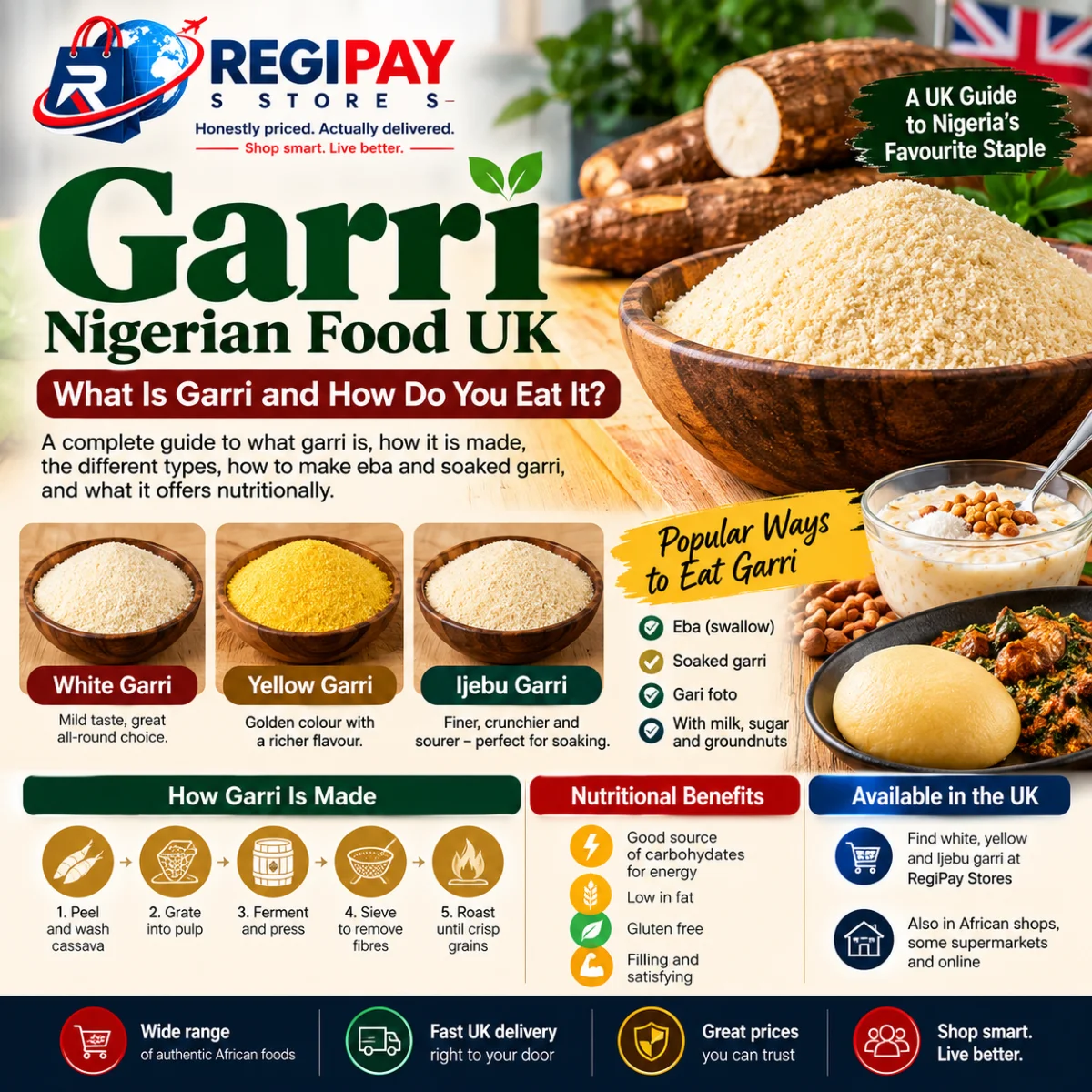
Garri. Roasted, fermented cassava granules. Mixed with hot water and stirred it becomes eba; soaked in cold water with sugar, milk and groundnuts it becomes a snack or light meal. Ijebu garri is sour, fine and crunchy and is the one most people soak. White garri and yellow garri (roasted with a little palm oil) are the usual choices for eba. Garri keeps for months in a sealed container away from damp.
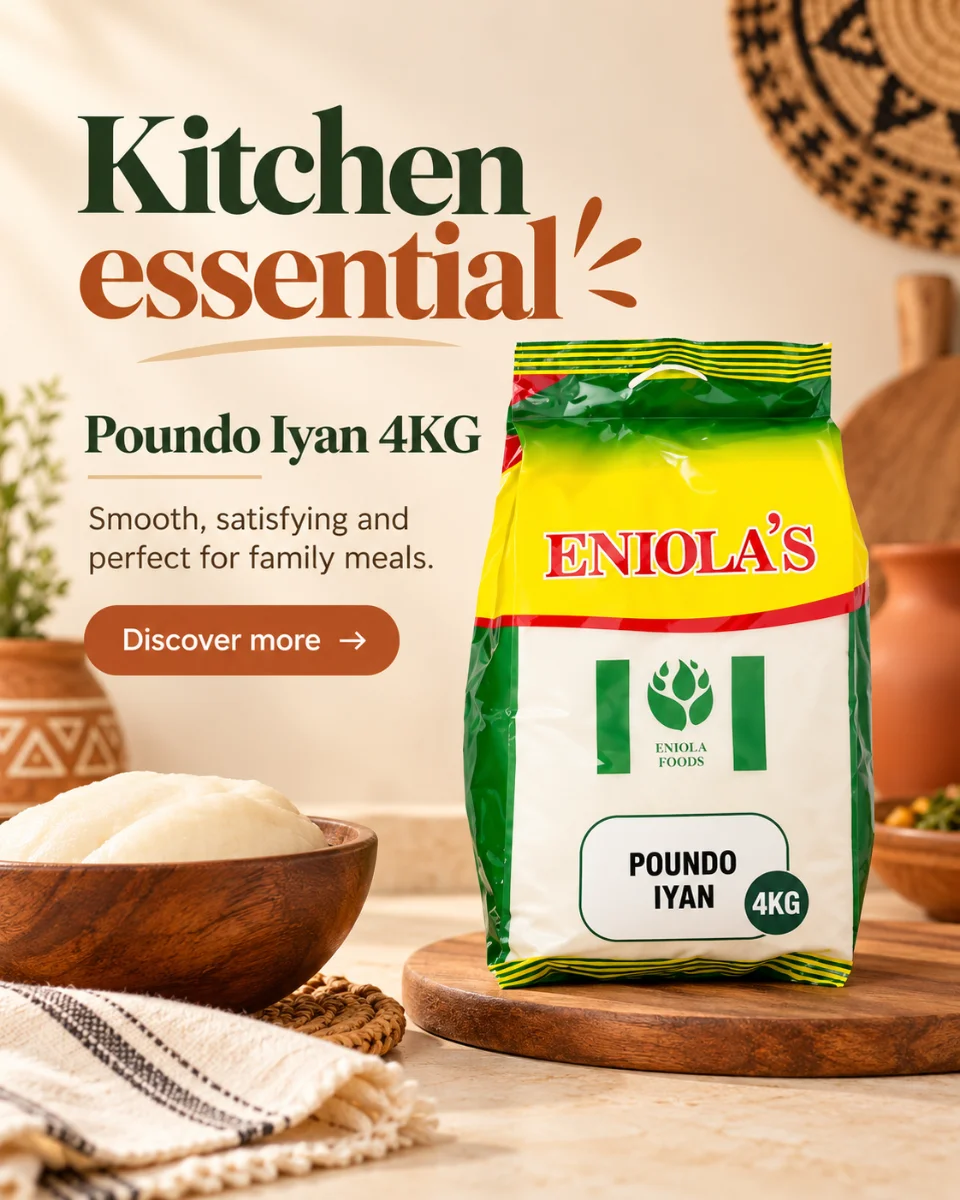
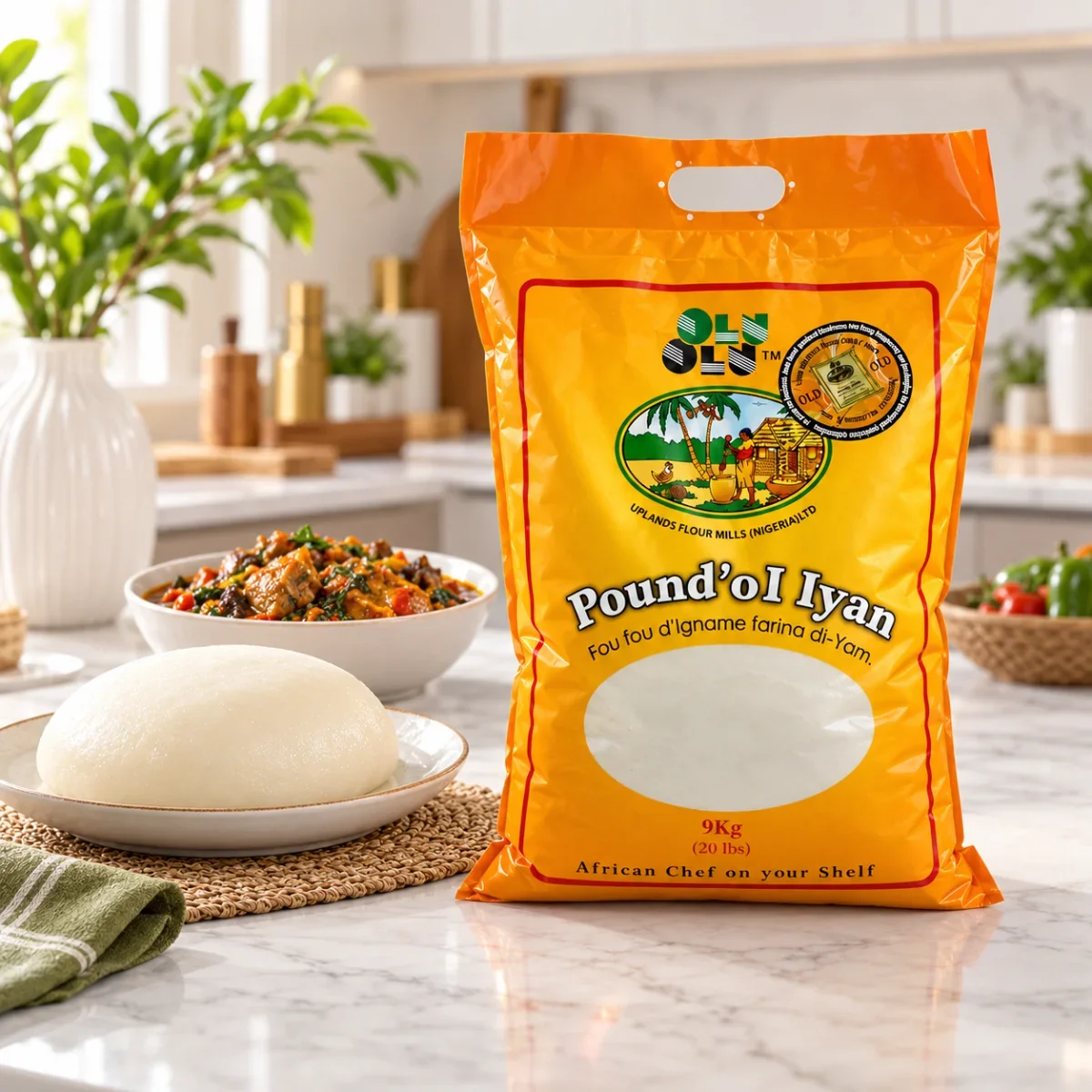
Pounded yam flour (poundo iyan). Dried yam milled into a fine flour. Stirred into boiling water, it gives you something close to traditional pounded yam without the mortar and pestle. It is the swallow most UK households reach for on a weekend because it is smooth, filling and quick.
Semovita and semolina. Wheat-based swallows that cook smooth and mild. Popular with children and with anyone who finds eba too heavy.
Amala (elubo). Made from dried yam peel or yam flour, sometimes plantain or cassava. It cooks to a dark brown, soft dough and is traditionally eaten with ewedu and gbegiri.
Fufu flour and plantain flour. Fufu in the Nigerian sense is fermented cassava; in Ghana the word covers a different, pounded mix. Plantain flour is a lighter, slightly sweet option.
Tip for buying online. Swallow flours are heavy, so buying a larger bag or a bundle usually works out better than several small packs. Check the net weight on the listing rather than the photo, because brands reuse similar bags across sizes.
Rice, beans and grains
Long grain parboiled rice. The backbone of jollof rice and fried rice. Parboiled rice holds its shape through the long simmer in tomato stew, which is why Nigerian cooks prefer it to basmati for jollof.
Beans. Honey beans (oloyin) are sweet and soft and are the favourite for ewa agoyin and beans porridge. Black-eyed beans are easier to find in UK supermarkets and work for moi moi and akara once peeled.
Ofada rice. A short, unpolished local rice with a strong aroma, served with ayamase or ofada sauce. It is more of a treat than a staple outside Nigeria.
Guinea corn and millet. Used for pap (ogi or akamu) and for kunu drinks in the north.
Oils and fats
Red palm oil. This is the single ingredient that makes Nigerian food look and taste like Nigerian food. It colours and flavours egusi, efo riro, banga, ofe nsala and stews. In a cold UK kitchen it sets solid, which is normal; stand the bottle in warm water to loosen it. A larger container makes sense if you cook soup weekly.
Vegetable or groundnut oil. For frying plantain, puff-puff and akara, and for the base of tomato stew.
Banga (palm fruit concentrate). Tinned palm nut cream used for banga soup and ofe akwu. It saves the long job of boiling and pounding palm fruit.
Soup and stew ingredients
This is where a Nigerian food list gets long, because each soup has its own signature.
Egusi. Ground melon seeds that thicken and flavour egusi soup. Buy it ground or whole; whole seeds keep longer and can be blended at home.
Ogbono. Ground wild mango seed that gives ogbono soup its famous draw. A little goes a long way.
Ground crayfish. Small dried prawns, ground to a powder. It adds the savoury, slightly smoky depth that sits under almost every soup. Keep it sealed, because the smell travels.
Stockfish and dried fish. Air-dried cod and smoked catfish or mackerel. They need soaking, sometimes overnight, but add real character to soups.
Locust beans (iru or dawadawa). Fermented seeds with a strong aroma, essential for ayamase, efo riro and many Yoruba dishes.
Leaves. Ugu (fluted pumpkin), bitter leaf, uziza, scent leaf and waterleaf are traditional. In the UK many cooks use frozen or dried versions, or swap in spinach and kale.
Pepper. Scotch bonnet and tatashe (red bell pepper) blended with tomato and onion form the stew base. Dried ground chilli and cameroon pepper add heat without the fresh prep.
Ofe nsala and pepper soup spices. Pre-mixed pepper soup spice, uda, uziza seeds and ehuru for anyone cooking Igbo and Niger Delta soups.
Seasonings and stock
Stock cubes. Maggi and Knorr cubes are in almost every Nigerian pot. Many households keep both chicken and beef flavours.
Curry powder and dried thyme. The classic pairing for jollof rice, fried rice and chicken stew. Nigerian-style curry powder is milder and more turmeric-led than many Indian blends.
Bay leaves, nutmeg and ginger. Bay goes into jollof, nutmeg into puff-puff and chin chin, ginger into pepper soup and zobo.
Tomato paste. Tinned or sachet tomato paste deepens the colour and body of stew and jollof.
The breakfast cupboard
Breakfast in many Nigerian homes is either a hot drink with bread, a bowl of cereal, or pap with akara. A UK version of that cupboard usually holds:
Golden Morn. A maize and soya cereal from Nestlé that many people grew up eating with milk and sugar.
Custard powder. Cooked thick and eaten like pap, often with akara or moi moi.
Ogi or pap. Fermented maize, millet or guinea corn starch, cooked into a smooth porridge.
Milo and other malt drinks. Chocolate malt powder stirred into hot milk. In plenty of households it is the default bedtime drink as well.
Peak, Nido or other evaporated and powdered milk. For tea, Milo, garri and cereal. Powdered milk travels and stores well.
Bread and spreads. Agege-style bread is the dream, but any soft white loaf does the job with butter or a fried egg.
Snacks and small chops
Plantain chips. Thin, crunchy and either sweet or chilli. A box of single packs is handy for school bags and work lunches.
Chin chin. Fried, sweet dough cubes, often made at home for parties.
Puff-puff mix. For the fried dough balls served at every celebration.
Kuli kuli. Crunchy groundnut sticks from the north.
Groundnuts. Roasted peanuts eaten on their own or with soaked garri.
Drinks
Malta Guinness and other malt drinks. Non-alcoholic, sweet and malty, best served cold. Buying by the case is common because they disappear quickly.
Zobo. A hibiscus drink, usually made from dried zobo leaves with ginger, pineapple and cloves.
Chapman. A party drink mixed from soft drinks, citrus, cucumber and grenadine-style syrup.
Kunu. A northern millet drink, sometimes sold in powder form.
Noodles and quick meals
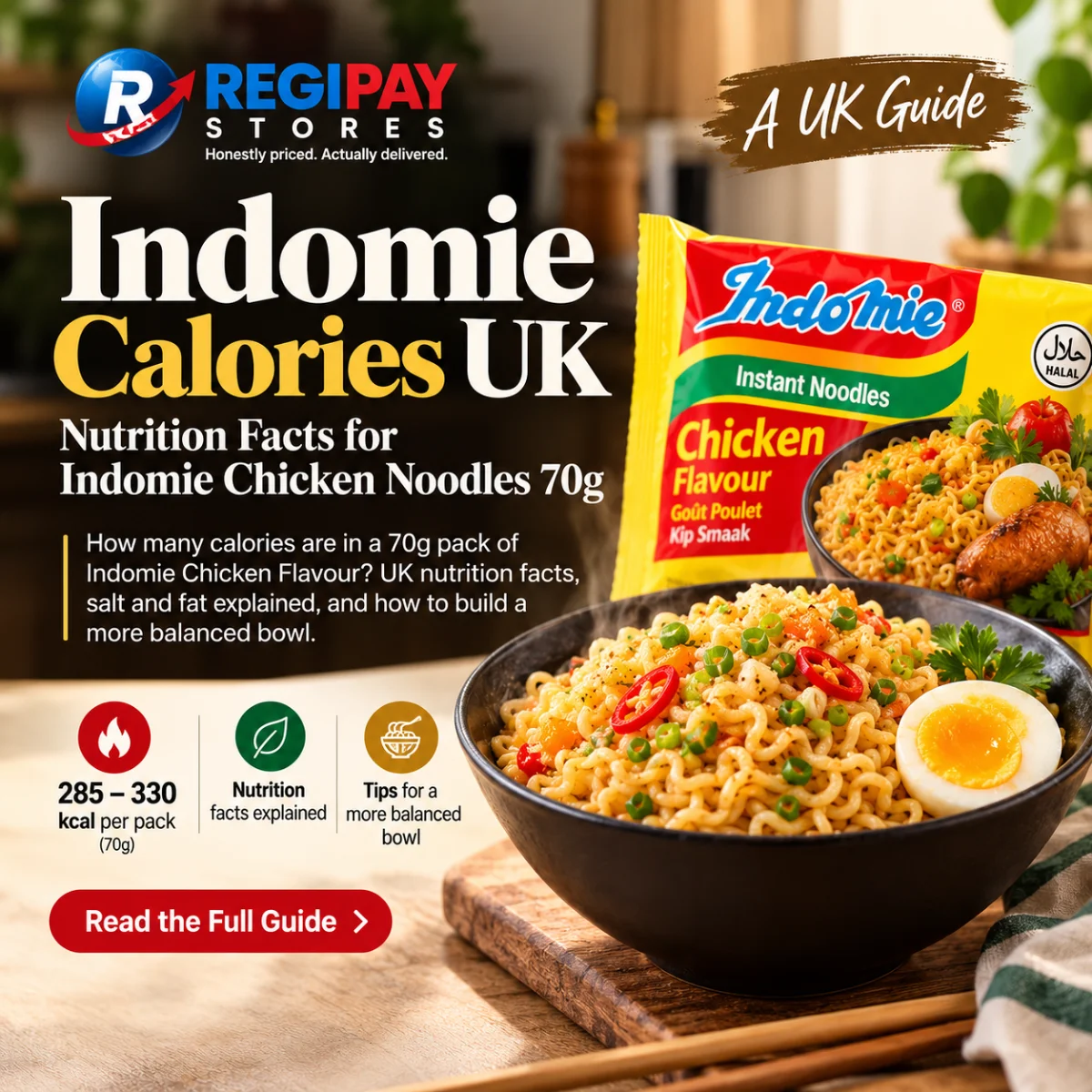
Indomie. Instant noodles have become a Nigerian institution. Cooked with egg, pepper, onion and sometimes sardines or sausage, they are a fast dinner for students and busy parents alike. Buying a full carton is the usual approach in a Nigerian household.
Spaghetti. Cooked jollof-style in tomato stew, it is a weeknight favourite.
Storage tips for UK kitchens
UK homes are cooler and damper than most Nigerian kitchens, which helps some foods and hurts others.
Keep garri, flours and egusi in sealed containers. Damp makes them clump and can spoil them. Store crayfish, stockfish and dried fish in airtight boxes, ideally in a cupboard away from other food, or chilled in the fridge if you only use them now and then. Let palm oil set in the cupboard; it does not need the fridge. Check best-before dates on cereals and powdered milk, because these are the items that tend to sit at the back of the cupboard longest.
A starter shopping list
If you want a short version to take into a shop or to build a first online order, this covers most everyday cooking:
- Garri (one sour, one for eba if you like both)
- Pounded yam flour
- Long grain parboiled rice
- Honey beans or black-eyed beans
- Red palm oil
- Vegetable oil
- Ground crayfish
- Egusi
- Stock cubes, curry powder and thyme
- Tomato paste and dried chilli
- Indomie noodles
- Milo, milk powder and a breakfast cereal
- Plantain chips and a few cans of malt drink for guests
Buying Nigerian groceries online in the UK
Most UK towns have an African or international shop, and the bigger supermarkets carry a world food aisle with rice, palm oil and a few spices. Online shopping fills the gaps, especially for heavy items like flour bags, palm oil and full cartons of noodles or malt drinks, which are tiring to carry home on the bus.
When you buy online, check three things on each listing. First, the net weight or quantity, written in the text rather than shown only in a photo. Second, the brand, because garri and poundo in particular vary in texture and taste between brands. Third, the delivery estimate, so you are not left waiting for a soup ingredient you need this weekend.
Shop the staples in one order
If you would rather not build your cupboard item by item, two of our bundles cover most of this list in a single delivery across the UK.
The West African Pantry Starter brings together the core swallows, palm oil and noodles a Nigerian kitchen relies on, and is a good first order for a new home or a student flat.
The Nigerian Pantry Plus is a fuller restock with garri, poundo yam flour, red palm oil, Indomie noodles and ground crayfish, built for households that cook Nigerian food every week.
You can browse the rest of the range, from Malta Guinness to plantain chips, in our African and Caribbean groceries section.