
Ask anyone who grew up in a Nigerian, Ghanaian or Caribbean household in Britain where the good food came from, and you will usually hear the same story. There was one shop, often a long bus ride away, where you could find proper garri, red palm oil that actually tasted of palm, and a crate of Malta Guinness for a party. You went once a month, carried back as much as your arms would allow, and made it last.
That picture has changed. The UK's African and Caribbean communities are larger and more spread out than ever, from Peckham and Woolwich to Manchester, Birmingham, Leicester, Leeds, Glasgow and the smaller towns in between. Many families now live hours from the nearest specialist grocer. At the same time, more British people with no family connection to West Africa or the Caribbean have discovered jollof rice, suya, plantain and pepper soup through friends, restaurants and social media, and want to cook them at home.
Buying online fills the gap. It lets diaspora households stock up on familiar staples without a day trip, and it lets newcomers find ingredients they would never see on a supermarket shelf. This guide explains what you can realistically buy online in the UK, what the big supermarkets do and do not stock, and how to tell a trustworthy African food retailer from one you should avoid.
What African food can you buy online in the UK?
The range available online is now wide enough to cover most everyday cooking. Here is what you can expect to find from a good specialist retailer.
Nigerian staples
- Garri — roasted, fermented cassava granules. White garri and yellow garri (made with palm oil) are both common, and Ijebu garri, which is sharper and more sour, is a favourite for soaking with cold water, sugar and groundnuts. Garri is also made into eba, one of the most popular swallows.
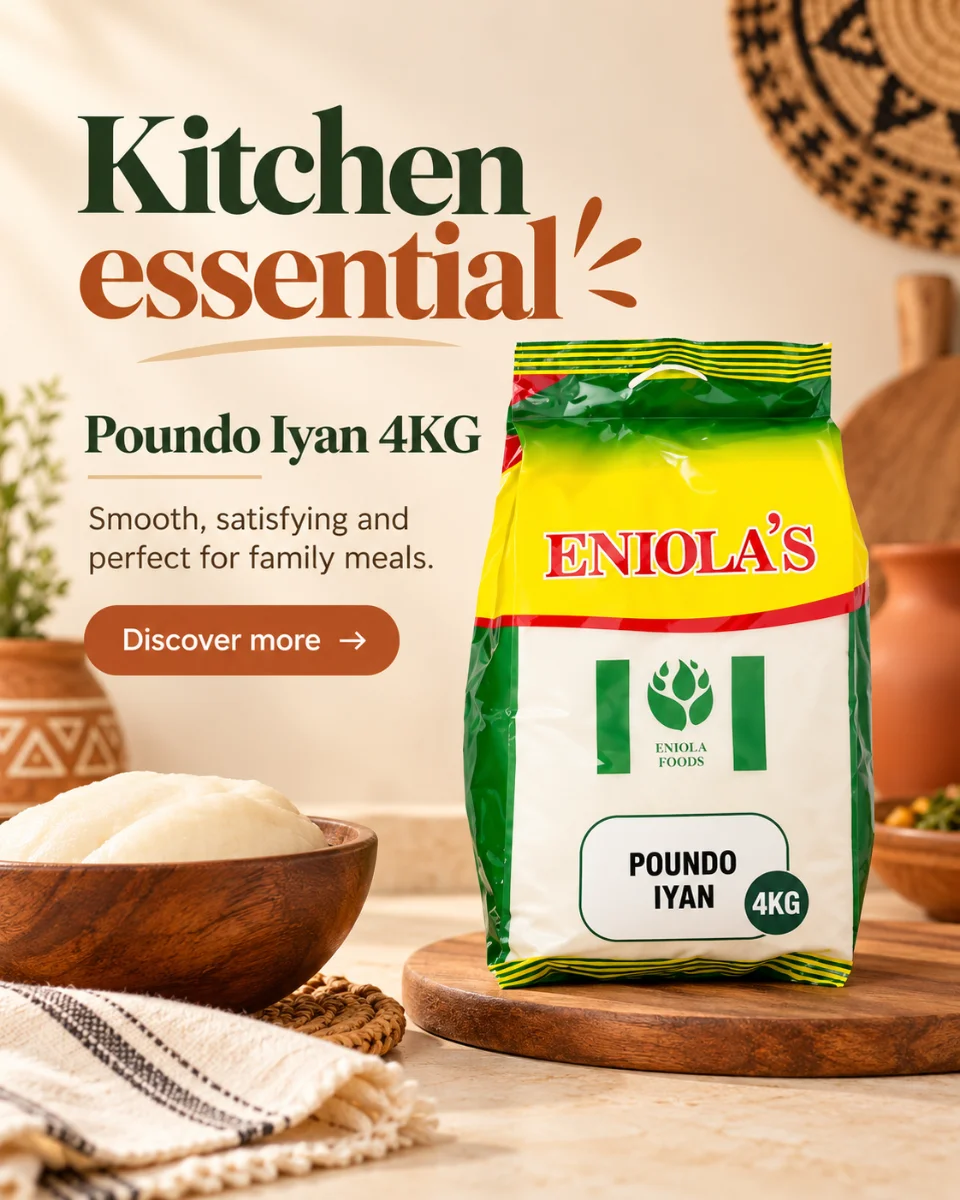
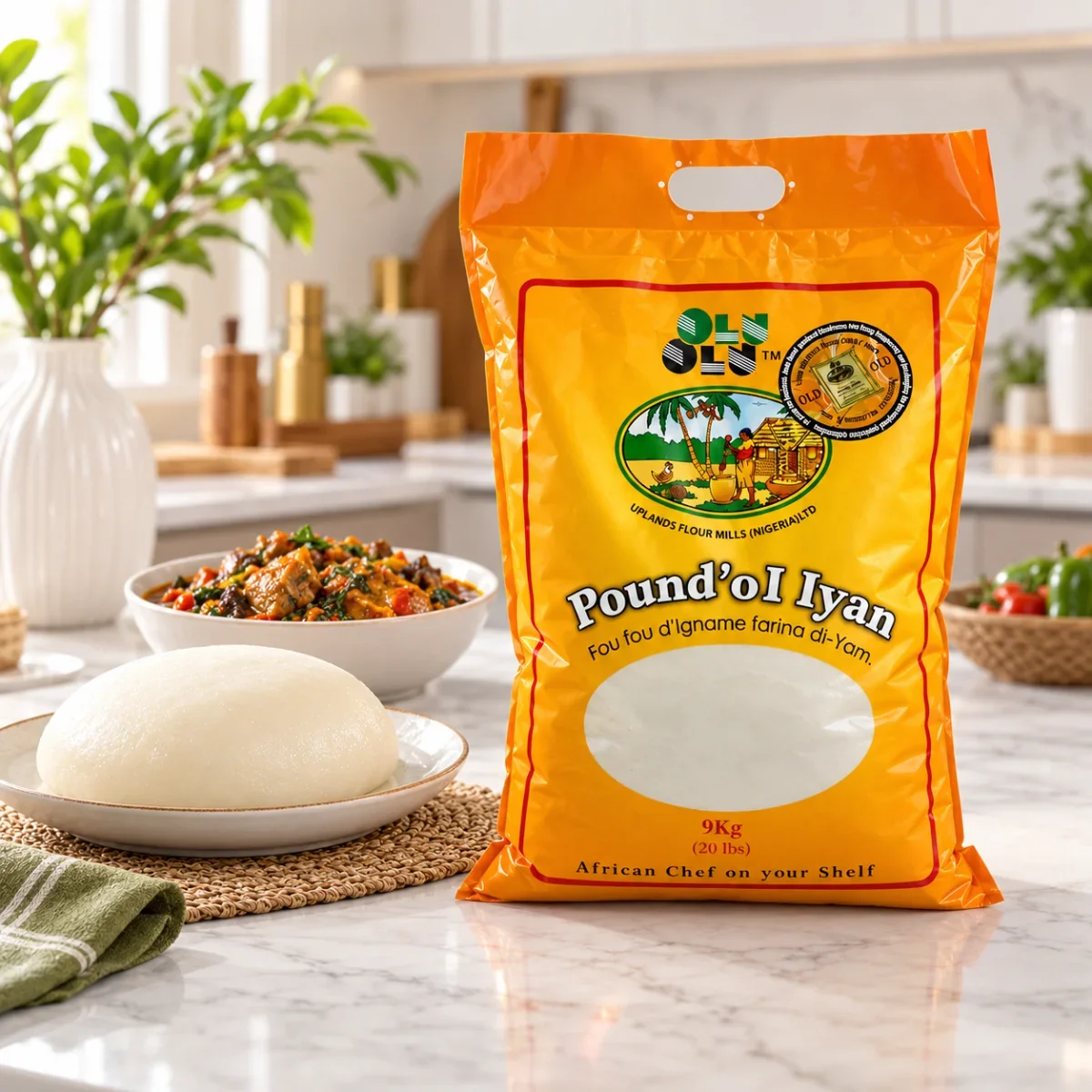
- Pounded yam flour — often sold as poundo or poundo iyan. It lets you make smooth pounded yam in a pot in a few minutes, with no mortar and pestle needed.
- Red palm oil — the backbone of banga soup, egusi, ofe owerri and countless stews. Good palm oil is deep orange-red and solidifies in a cold British kitchen, which is normal.
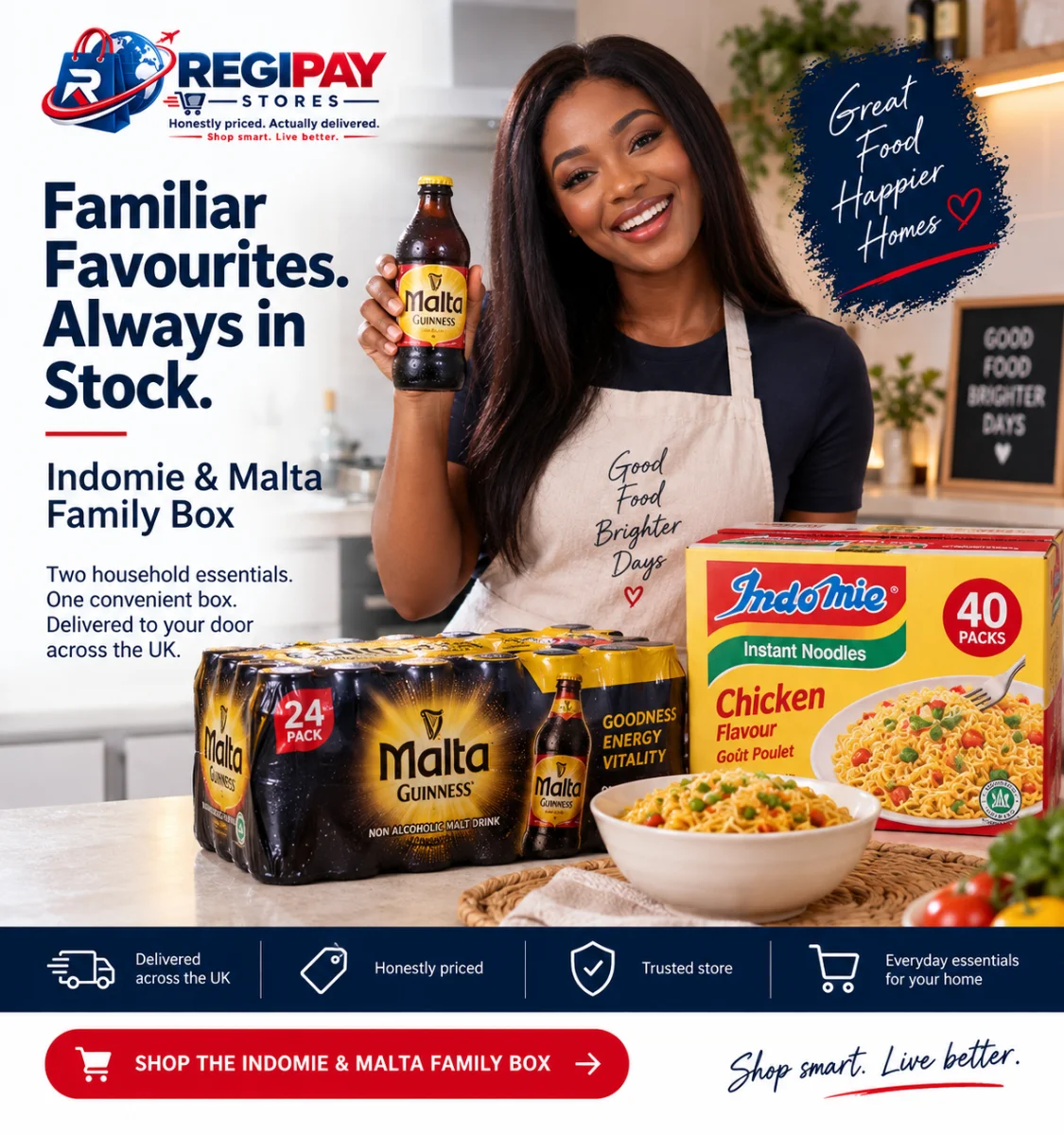
- Indomie noodles — the instant noodle that half of Nigeria grew up on. Usually sold in multipacks or full cartons.
- Crayfish — dried, ground or whole, and essential for the savoury depth in Nigerian soups.
- Also widely available: egusi seeds, ogbono, stockfish, dried fish, semovita, elubo (yam flour for amala), beans, ofada rice, suya spice and seasoning cubes.
West African drinks
- Malta Guinness — a non-alcoholic malt drink that is a fixture at Nigerian and Ghanaian celebrations.
- Supermalt — another popular malt, slightly sweeter to many palates and especially loved in Caribbean households.
- Fanta Pineapple — not always easy to find in UK shops, and a nostalgic favourite for many West Africans.
- Other drinks you may come across include Maltina, Amstel Malta, Vimto and zobo (hibiscus) concentrates.
Caribbean staples
- Plantain chips — sweet or salted, and a lunchbox staple.
- Ackee — usually tinned, and the essential partner to saltfish in Jamaica's national dish.
- Scotch bonnets — fresh, dried, or in pepper sauces and pastes. They bring heat and a fruity flavour that ordinary chillies cannot match.
- Also common: callaloo, gungo peas, hard-dough bread mixes, jerk seasoning, coconut milk and hot pepper sauces.
Hair and beauty
Many African and Caribbean grocers have always sold hair and beauty products alongside food, and online stores often do the same. You can typically find human hair bundles and wigs, hair growth and scalp treatments, shea butter, black soap and satin bonnets for protecting hair overnight.
Does Tesco sell African food?
Yes, but in a limited way. Tesco stocks a small selection of African and Caribbean products in some stores, usually in a World Foods aisle. The items you are most likely to find are Indomie noodles and a handful of tinned products such as ackee, beans and coconut milk, plus plantain in the fresh produce section of larger branches.
The online range is narrower still, and what is available varies by store and changes over time. You will rarely find Nigerian staples such as garri, pounded yam flour, ground crayfish, egusi or stockfish through Tesco's website. If your shopping list is mostly made up of authentic Nigerian and West African ingredients, a specialist online retailer is likely to be the better option.
Does Aldi sell African food?
Aldi occasionally includes African or Caribbean themed products in its Specialbuys range, often as limited-time promotions tied to particular events. These can be worth looking out for, but they come and go quickly.
Aldi is not a consistent source of Nigerian or West African staples. Garri, pounded yam flour and red palm oil are not regularly stocked, and you cannot rely on finding them from one week to the next. For anything you cook regularly, it makes sense to have a dependable specialist supplier.
Does Sainsbury's sell African food?
Sainsbury's stocks some African and Caribbean products, mainly in its larger stores and in areas with significant African and Caribbean communities. Indomie noodles, a selection of Caribbean products such as sauces, seasonings and tinned goods, and sometimes plantain are the most common finds.
As with Tesco, selection varies by location. A store in south London may have a much better range than a branch in a market town. The online range tends to be more limited than what you will find from a specialist retailer, especially for Nigerian soup ingredients and swallows.
How to choose a trusted online retailer for African food in the UK
Because the specialist market is made up of many small and medium-sized businesses, quality varies a great deal. Some sellers are excellent; others list products with blurry photos, no ingredient lists and no clear information about who they are. Before you place an order with a store you have not used before, look for these signs.
A UK-based seller
A retailer that is based in the UK and lists a UK business address and contact details is accountable under UK consumer law. That matters if something goes wrong with your order. It also means your goods are less likely to be held up at customs or to arrive with unexpected charges.
Proper product descriptions
A good product listing tells you exactly what you are buying: the brand, the pack size or weight, the quantity in a multipack, and what the product is used for. Vague listings such as "African flour, 1 bag" are a warning sign. You should be able to tell from the page whether you are buying white or yellow garri, a 1.5kg or a 4kg bag of poundo, or a single can or a full case of drinks.
Clear delivery information
Look for a published delivery or shipping policy that tells you how orders are sent, how long dispatch takes and roughly when you can expect your parcel. Be cautious of sellers who promise very short delivery times without explaining how they achieve them.
A clear returns policy
Every UK online retailer should explain how returns and refunds work. Perishable food and opened items are often excluded from standard returns, which is reasonable, but a trustworthy seller will still tell you what to do if an item arrives damaged, leaking or incorrect.
Allergen information for food
UK food rules require that allergen information is available to customers before they buy. A reputable online grocer will list ingredients and highlight allergens such as peanuts, sesame, wheat, soya, fish and crustaceans. This is particularly important for African and Caribbean foods, because ingredients like groundnut, crayfish and stockfish are common and can cause serious reactions.
What to look for when buying African food online
Here is a quick checklist to run through before you hand over your card details.
- Check the seller is UK-based. Look for a UK address, a contact email or phone number, and company or trading details in the footer or on an About page.
- Check allergen information is provided. If you cannot see ingredients or allergens on a food listing, contact the seller before ordering, or shop elsewhere.
- Check delivery windows are realistic. Some specialist products are shipped from different warehouses or suppliers, which can affect timings. A seller who explains this upfront is being straight with you.
- Check reviews from other customers. Independent review platforms are more reliable than testimonials on the store's own pages. Read a few recent reviews rather than relying on the star rating alone.
- Check the returns policy for non-perishable items. Dry goods such as garri, flour, noodles and tinned products should normally be covered by a standard returns process if unopened. Know the terms before you buy, particularly for larger orders.
A few extra tips can save you trouble. Check best-before dates when your order arrives, and store palm oil, flours and garri in a cool, dry cupboard in airtight containers. Dried fish, stockfish and crayfish keep best sealed and away from moisture. If you buy in bulk for a celebration, check the pack sizes carefully so you are not caught short or left with far more than you need.
Bringing it all together
The big UK supermarkets have improved their world food ranges, and it is worth checking your local Tesco or Sainsbury's for everyday items like Indomie and plantain. But for the ingredients that make Nigerian, West African and Caribbean cooking taste right, from garri and poundo to palm oil, crayfish and malt drinks, a specialist online retailer is usually the most reliable route.
Take a few minutes to check who you are buying from, read the product details properly and make sure allergen, delivery and returns information is clear. That way you can keep your kitchen stocked with the food you love, wherever in the UK you live.
You can browse our range of African and Caribbean groceries, including Nigerian staples and West African drinks.