Banga soup is a Nigerian palm fruit soup from the Niger Delta, and you can make a very good one in a British kitchen without ever handling a fresh palm fruit. A tin of palm fruit concentrate gets you closest to the original, and bottled red palm oil gets you a lighter, quicker soup that eats beautifully but is not quite the same dish. This recipe covers both routes and is clear about which one you are actually cooking.
Below is what goes in the pot, where to buy it here, the method with timings, the three faults that spoil it, and what to eat it with.
Last reviewed September 2026. Prices, pack sizes and availability change, so confirm the current price on the product page before ordering.
What banga soup is and where it comes from
Banga soup belongs to the Niger Delta and is most strongly associated with Urhobo, Isoko, Itsekiri and Ijaw cooking in and around Delta State. "Banga" is the everyday word for the palm fruit, and the soup is built from the fruit's pulp rather than from oil alone. The fruits are boiled soft, pounded so the pulp comes away from the nuts, then washed through with hot water so a thick orange liquor drains off. That liquor is the soup base.
Everything else is seasoning and protein: dried and smoked fish, catfish, bone-in beef or goat, ground crayfish, chilli, and a set of aromatic seeds, barks and dried leaves that give banga its particular smell. Done properly it is thick, faintly grainy, rust orange rather than scarlet, and it tastes of the fruit first and the spice second. If the spice is the loudest thing in the bowl, something has gone wrong.
Banga soup and ofe akwu are related, not identical
Ofe akwu is the Igbo palm fruit sauce, and akwu is the Igbo word for palm fruit. Same base, different intent. Ofe akwu is seasoned more simply, leaning on uziza or scent leaf and sometimes fermented locust bean, it is thinner, and it is eaten with white rice rather than a swallow. Banga carries a heavier, more resinous spice blend and is built for starch or eba.
In diaspora kitchens the two names get used interchangeably and nobody is much bothered by it, but it is worth knowing which one you are aiming at. For the rice sauce, keep the seasoning light and finish with uziza. For banga proper, you need the spice blend, and there is no way around that.
Palm fruit concentrate against plain palm oil
These are two different products, sold side by side, and confusing them is the commonest reason a first attempt disappoints.
Palm fruit concentrate, also labelled palm nut cream, banga sauce base or sauce graine, is the cooked and sieved pulp thinned with water. It contains the fruit's solids and fibre, so it thickens as it reduces and carries the depth that makes banga taste like banga. Strength varies between brands, so taste and adjust rather than following the tin blindly.
Red palm oil is the pressed oil with the pulp taken out. It gives colour, aroma and fat, but nothing to thicken with and much less fruit character.
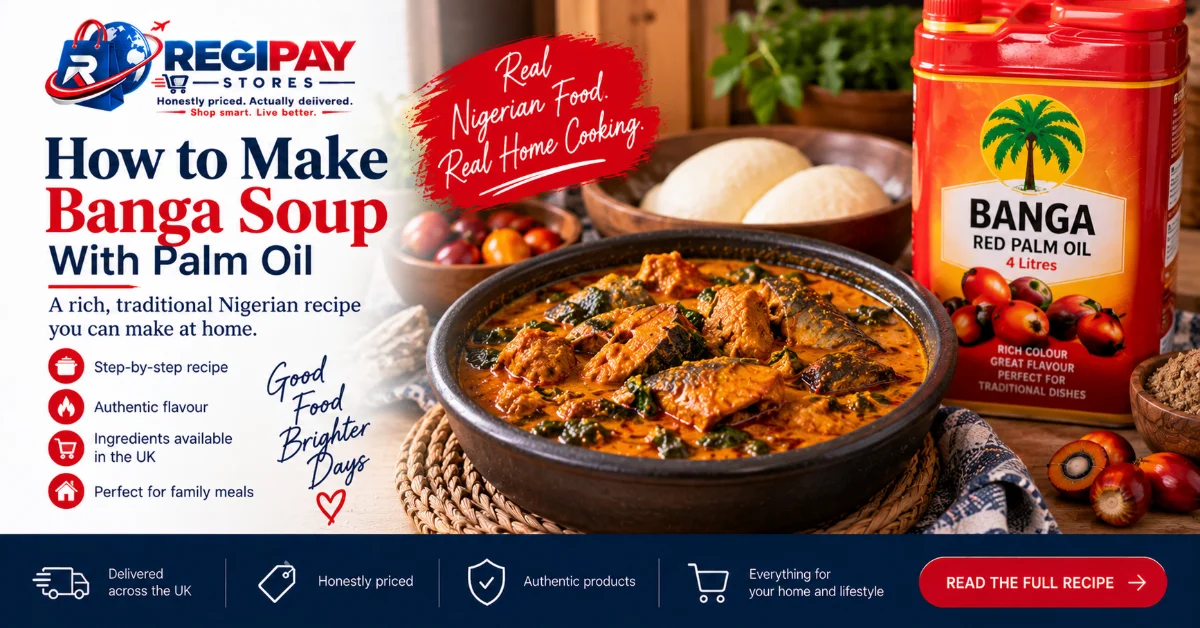
The honest position is this. Build the soup on red palm oil alone and you are making a palm oil stew that eats like banga rather than banga itself. It is a good dish, it takes half the time, and plenty of UK households cook it that way weekly. If a tin of concentrate is within reach, though, use the tin and use the oil to finish. A four litre bottle such as Banga Red Palm Oil covers both jobs for months.
Banga spice, beletete and the oburunbebe stick
Banga spice is a blend rather than a single ingredient, and it changes from household to household. It commonly includes ataiko, irugeje and rigije, often aidan fruit, and it is sold here as whole seeds and pods or as a ready-ground sachet labelled simply "banga spice". Ground is easier and perfectly respectable.
Two other things turn up in traditional recipes and cause most of the panic. Beletete is a dried leaf added near the end for aroma. The oburunbebe stick is a thick woody stick dropped into the pot, stirred with and left in while the soup simmers.
What to do when you cannot get them
Be realistic about substitutes; most of the ones you will read online do not work.
- No banga spice. There is no honest replacement built from a supermarket spice rack; bay, allspice and nutmeg do not taste like it. Buy a ground sachet from an African grocer or online. It keeps for months in a sealed jar and it decides whether the soup tastes right.
- No beletete. Leave it out. The soup loses a layer of aroma and is otherwise fine. Dried bay is not a substitute and pulls the flavour somewhere else entirely.
- No oburunbebe stick. Leave it out too. An extra spoonful of ground crayfish lifts the body slightly, but do not pretend it is the same thing.
Ground ehuru, sometimes sold as calabash nutmeg, and uziza seed are worth having if your grocer has them. Neither stands in for the blend on its own.
What you need
Quantities serve four generously with a swallow, or six with rice.
| Ingredient | Quantity | Where to get it in the UK | Notes |
|---|---|---|---|
| Palm fruit concentrate | 1 x 800g tin | African and Caribbean grocers, in person or online | Skip if using the palm oil route |
| Red palm oil | 3 tbsp to finish, or 150ml for the oil-only route | African grocers, online | Buy by the bottle, not the sachet |
| Bone-in beef or goat | 500g | Any butcher, most large supermarkets | Bone matters, it is where the stock comes from |
| Dried catfish | 1 to 2 pieces | African grocers | Soak before use |
| Smoked fish | 150 to 200g | African grocers | Supermarket smoked mackerel is a workable stand-in |
| Ground crayfish | 2 tbsp | African grocers | Keeps well frozen |
| Ground banga spice | 2 tbsp | African grocers, online | The non-negotiable one |
| Beletete leaves | Small pinch | African grocers | Optional |
| Scotch bonnet | 1 to 2 | Most large supermarkets | Blend or chop finely |
| Onion | 1 small | Anywhere | For the meat stock only |
| Stock cubes | 2 | Anywhere | Season in stages, they are salty |
| Water | 1 to 1.2 litres | Plus the stock the meat gives you |
Banga soup is rich and oily by design. If you are managing your fat intake for a medical reason, that is a conversation for your GP, pharmacist or a registered dietitian rather than a recipe page.
Method
- Boil the meat, 40 to 50 minutes. Beef, sliced onion, one stock cube, a pinch of salt and 300ml water. Lid on, low simmer. Beef takes 40 to 50 minutes to tenderise, goat 60 to 75. Do not drain it. That stock is half the flavour.
- Prepare the fish, 10 minutes, alongside. Cover the dried catfish and smoked fish with just-boiled water for 10 minutes, then rinse away grit and pick out obvious bones. Keep the pieces large; they break up on their own.
- Build the base, 20 to 25 minutes. Tip the concentrate into a wide pot with 700ml water and whisk smooth. Bring to the boil, then simmer uncovered for 20 to 25 minutes until it darkens slightly and shows a rim of oil at the edge. That rim is the sign it is ready. For the oil-only route: warm 150ml red palm oil over a low heat for two to three minutes, until it is fully liquid and bright orange, and take it nowhere near smoking. Add 900ml of the meat stock topped up with water and bring to a simmer.
- Season, 10 minutes. Add the meat stock, banga spice, crayfish, chopped scotch bonnet and second stock cube, plus the oburunbebe stick if you have one. Simmer 10 minutes so the spice opens up rather than sitting raw on top.
- Add the protein, 10 to 15 minutes. In go the meat and the fish. Simmer gently, stirring occasionally so nothing catches.
- Finish, 3 to 4 minutes. Add the beletete and, on the concentrate route, the three tablespoons of red palm oil, and simmer just long enough for the oil to blend in.
- Adjust and rest, 5 minutes. Too thin, simmer uncovered another five to ten minutes; too thick, add hot stock a splash at a time. Check salt and heat, then rest it off the hob for five minutes.
Total time is about an hour and twenty for the concentrate version and fifty minutes for the palm oil version, most of it unattended.
The three things that go wrong
It splits and looks oily
A slick of orange oil on top with thin liquid underneath means the emulsion has broken, usually because the pot was boiled hard rather than simmered. Drop to a bare simmer, add 100ml of hot water or stock, and stir steadily for two minutes until it pulls back together. If a layer still floats, skim it and keep it for frying plantain. Prevention is not adding extra palm oil to a concentrate base until you have tasted it.
It tastes flat
Almost always one of three causes: no banga spice, too little crayfish and dried fish, or not enough time. A palm fruit base needs its twenty minutes of open simmering, and cutting that short leaves it watery. Add a tablespoon of crayfish and half a stock cube, simmer five minutes, then taste again before reaching for salt.
It is bitter
Bitterness comes from burnt palm oil far more often than anything else. Red palm oil taken past its smoking point turns acrid, and no amount of stock or sugar brings it back. Occasionally an old tin or a heavy hand with a woody spice does it instead. If the oil burned, the answer is unpleasant: dilute heavily with stock and more meat, or start again.
Banga soup, ofe akwu and palm oil stew compared
| Banga soup | Ofe akwu | Palm oil stew | |
|---|---|---|---|
| Base | Palm fruit pulp or tinned concentrate | Palm fruit pulp or tinned concentrate | Red palm oil and stock |
| Origin | Delta, Urhobo and neighbours | Igbo south-east | Everyday cooking, no fixed home |
| Seasoning | Banga spice blend, beletete, crayfish | Uziza or scent leaf, crayfish, sometimes locust bean | Pepper, onion, crayfish, stock |
| Texture | Thick, slightly grainy | Medium, pourable | Thinner unless thickened |
| Usually eaten with | Starch, eba, pounded yam | White rice | Rice, yam, plantain |
| Time in the kitchen | About 1 hour 20 | About 1 hour | About 50 minutes |
| Hardest thing to source here | Banga spice | Uziza leaf | Nothing |
What to serve it with
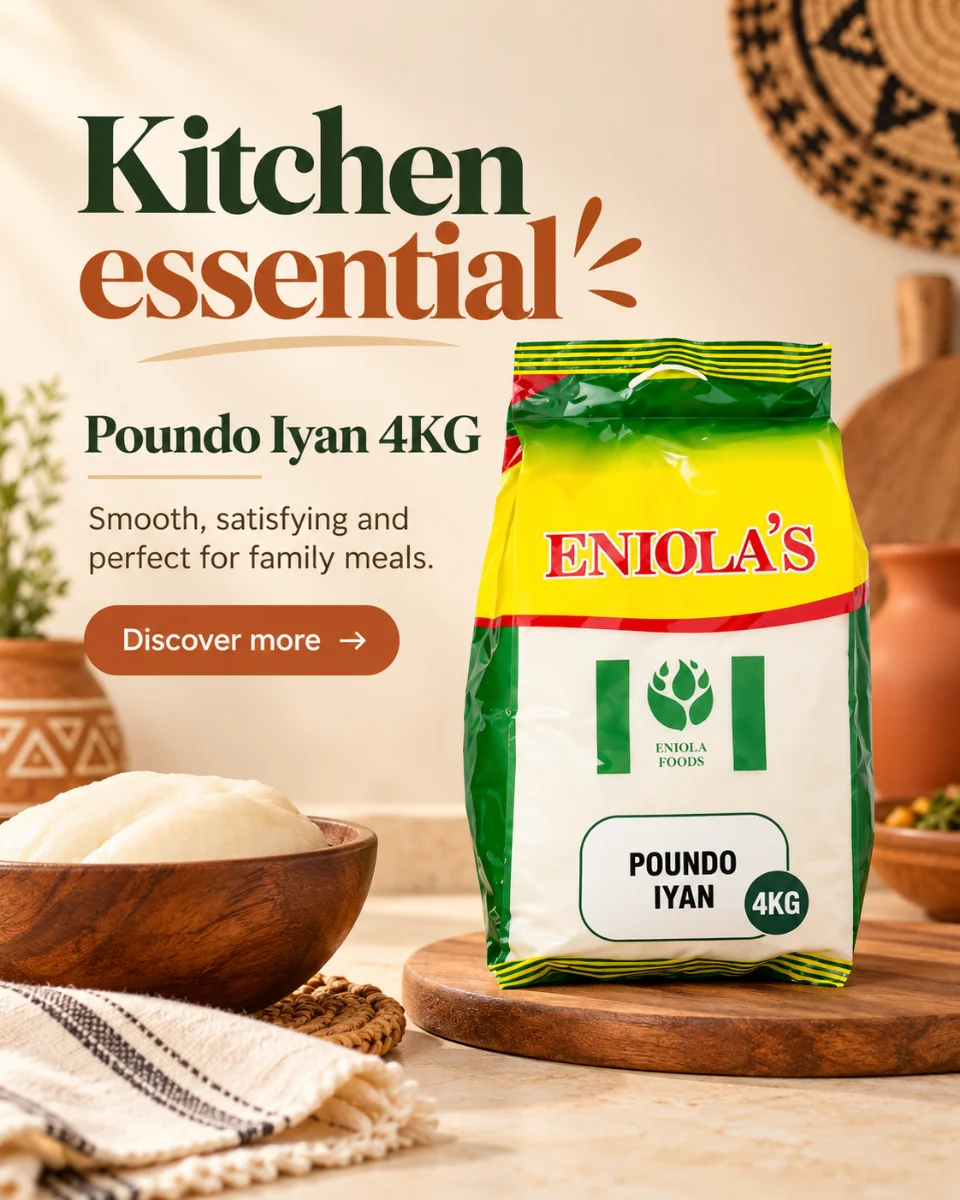
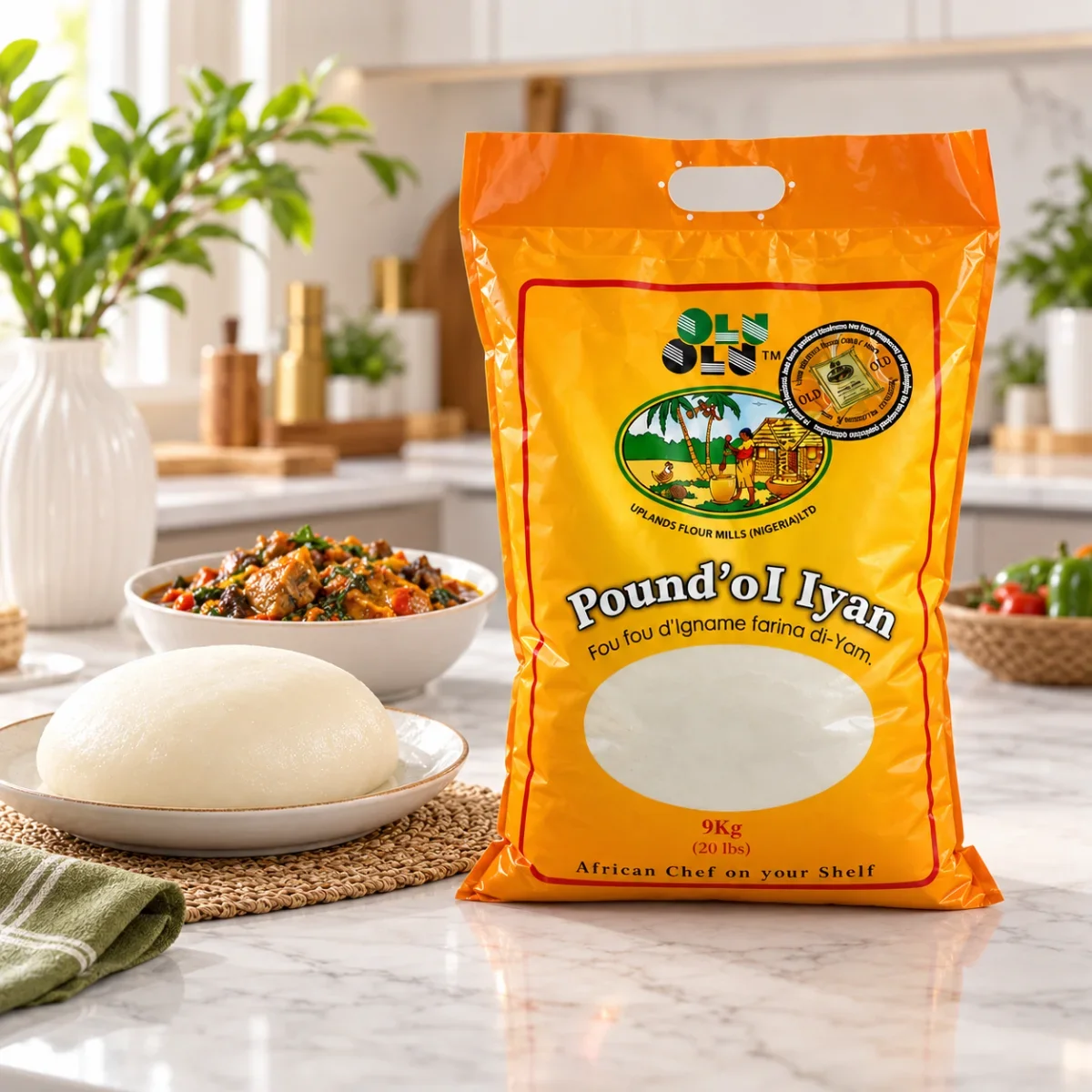
Starch is the traditional partner and the best one, though the least likely thing to be in a British cupboard. Eba is the everyday alternative and works well because a sour garri cuts the richness; our post on Ijebu garri explains why that variety tastes tangy and swells less than most. Pounded yam is the softest, most neutral option, and ten minutes from flour using the method in our guide to pounded yam with poundo flour.
White rice is the ofe akwu pairing rather than the banga one, but it is what most people reach for on a weeknight. Thin the soup slightly if you serve it that way, since a soup built for swallow is too dense to coat rice.
Freezing and reheating
Banga freezes better than most Nigerian soups because the fat protects it. Cool it within two hours, portion it into containers with a little headroom, and freeze for up to three months. Label the date; orange soup in a freezer all looks the same by February.
Thaw overnight in the fridge and reheat gently in a pan rather than a microwave. It will look split when it thaws and re-emulsifies with two minutes of stirring over a low heat. Make sure it is piping hot throughout before serving, and do not refreeze a reheated portion. In the fridge it keeps three days.
Frequently asked questions
What is banga soup made of?
Banga soup is made from palm fruit pulp, either from fresh fruit or from tinned concentrate, cooked with meat stock, dried and smoked fish, ground crayfish, chilli and a blend of aromatic seeds known as banga spice. Beletete leaves and an oburunbebe stick are traditional additions, and red palm oil usually finishes it rather than forming the base.
Can I make banga soup with just palm oil?
Yes, and a lot of UK households do. You get a thinner, lighter soup with the right colour and aroma but less of the depth the pulp gives, so it is really a palm oil stew that eats like banga. Use around 150ml of oil to a litre of stock and reduce it further.
What can I use instead of banga spice?
Nothing in a standard British spice rack substitutes for banga spice, and mixtures of bay, allspice and nutmeg taste wrong rather than close. Buy a ground sachet from an African grocer or online; it keeps for months sealed. Without it the soup tastes flat however much seasoning you add.
Is banga soup the same as ofe akwu?
They share the same palm fruit base but they are not the same dish. Banga is from the Niger Delta, carries a heavier spice blend and is eaten with starch or a swallow, while ofe akwu is the Igbo version, seasoned more simply with uziza or scent leaf and served with white rice.
Why is my banga soup bitter?
The usual culprit is palm oil heated past its smoking point, which turns acrid and cannot be corrected afterwards. An old tin of concentrate or too heavy a hand with woody spices can do it too. Warm palm oil gently and take it off as soon as it turns fluid and bright orange.
Do I need an oburunbebe stick?
No. It adds a faint resinous background and it is what many Delta cooks stir the pot with, but the soup is good without it and there is no household substitute. Leave it out rather than replacing it with something that tastes nothing like it.
How long does banga soup keep?
Three days in the fridge in a covered container, or up to three months frozen in portions. Cool it within two hours of cooking, reheat gently on the hob until piping hot throughout, and do not refreeze a reheated portion.
Getting the palm oil right
Whichever route you take, the oil decides the colour and much of the flavour, so buy a proper unrefined bottle rather than whatever is nearest. We stock Banga Red Palm Oil in 4 litres at £23.99 at the time of writing (October 2026), which is the sensible size if banga, egusi and efo riro are in regular rotation and far too much if they are not, so check the current price on the product page before ordering.