Ask ten Nigerians what garri is and you will get ten loving, slightly different answers. It is the food of hostel days and long journeys, the bowl you soak on a hot afternoon, the eba that sits beside a pot of egusi on Sunday. For anyone new to Nigerian food in the UK, though, it can look like a bag of coarse white or yellow crumbs with no instructions.
This guide explains what garri is, how it is made, the main types you will find in the UK, the different ways to eat it, and what it does and does not offer nutritionally. By the end you should be able to choose the right bag and turn it into a proper meal.
What is garri?
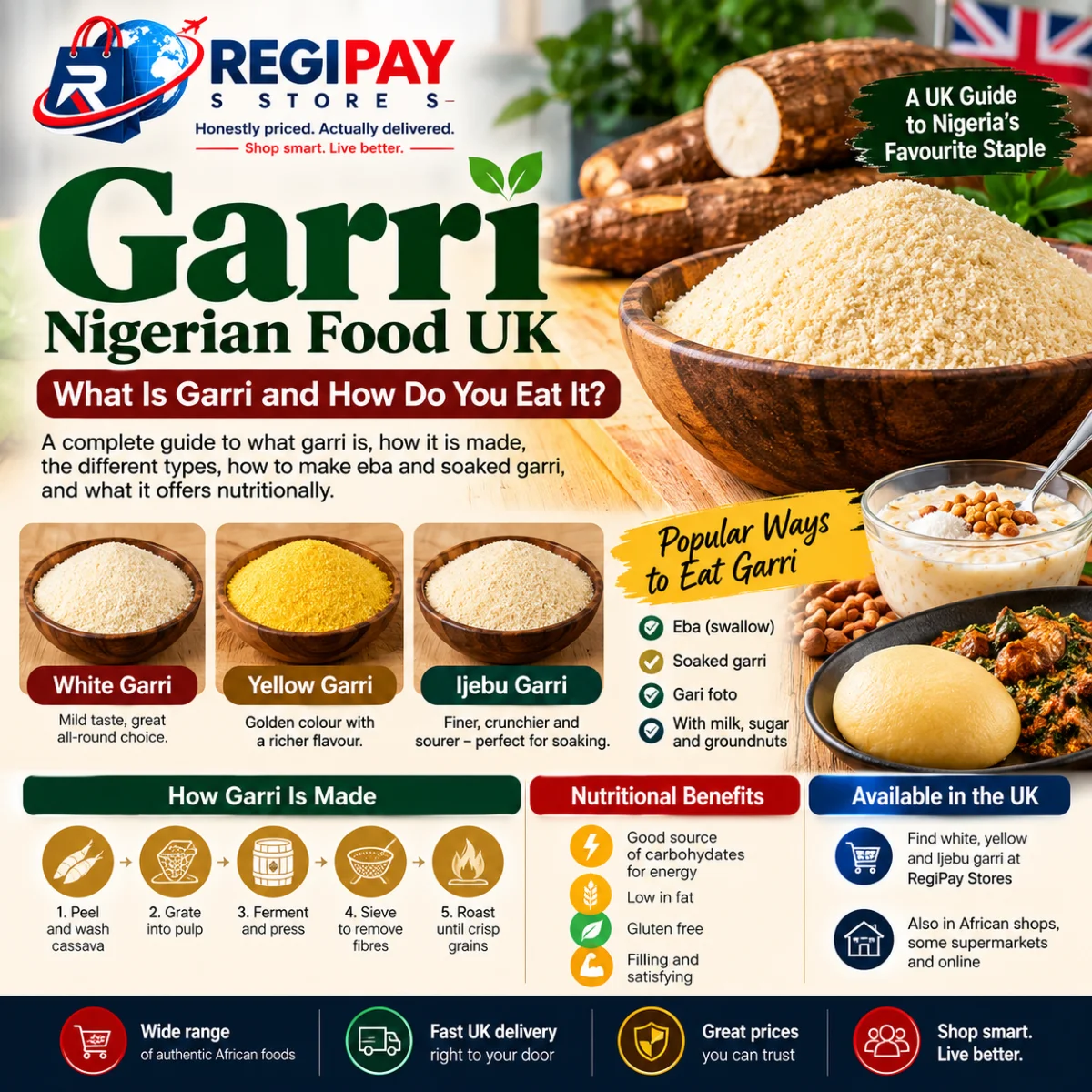
Garri (also spelt gari) is a dry, granular food made from cassava, a starchy root vegetable grown widely across West Africa. The cassava is peeled, grated, fermented, pressed, sieved and roasted until it turns into crisp, loose grains that keep for months without refrigeration.
It is eaten across Nigeria, Ghana, Benin, Togo, Cameroon and Sierra Leone, and in Nigeria it is one of the most important everyday foods in the country. Cheap, filling, long-lasting and quick to prepare, garri has fed generations of families, students and workers.
In the UK, garri is a pantry staple in Nigerian and Ghanaian homes and is sold in African shops, some large supermarkets and online.
How garri is made
The process is simple to describe and hard to do well, which is why texture and taste vary so much between brands.
- Peeling and washing. Fresh cassava roots are peeled and washed thoroughly.
- Grating. The roots are grated into a wet pulp.
- Fermenting and pressing. The pulp is packed into sacks and pressed under weight, usually for one to several days. During this time the liquid drains away and natural fermentation begins.
- Sieving. The pressed cake is broken up and sieved to remove fibres and lumps.
- Roasting. The sieved mash is roasted in a wide, shallow pan over a fire, stirred constantly until it dries and becomes crisp.
Fermentation and roasting are the steps that matter most. Fermentation gives garri its tang and reduces the naturally occurring compounds in raw cassava, which are not safe to eat in quantity. Roasting dries the grains so they keep, and gives them their crunch.
The main types of garri
White garri
The everyday garri in many Nigerian homes. It is roasted without palm oil, so it stays white or cream. Flavour ranges from mild to gently sour. It is a good all-round choice for eba.
Yellow garri
Yellow garri is made the same way but with a little red palm oil added during roasting, which gives it a golden colour and a slightly richer flavour. It is especially popular in the south and east of Nigeria and is often preferred for eba.
Ijebu garri
Named after the Ijebu area of Ogun State, Ijebu garri is fermented for longer, giving it a pronounced sour taste. It is usually finer, drier and very crunchy. Ijebu garri is the favourite for soaking because it stays crisp in cold water and tastes refreshing. It swells less than other types, so you may need a little more of it than you expect. You can read more in our guide Ijebu Garri Explained.
Ghana gari
Ghanaian gari tends to be very fine and dry, with a milder taste. It is used for gari soakings and for gari foto, a Ghanaian dish of gari moistened and mixed with a tomato, onion and egg sauce.
Coarse and fine grains
Within each type, brands differ in grain size. Coarser grains feel more substantial in eba; finer grains give a smoother result and soak faster. It is worth trying two or three brands to find the one your household likes.
How to eat garri
Eba: garri as a swallow
Eba is the most common way to eat garri in Nigeria. It is a firm, smooth dough eaten with soup.
How to make eba:
- Boil water in a kettle or pot.
- Pour the hot water into a bowl. For one person, around 250ml is a good starting point.
- Sprinkle in garri gradually, letting it sink and absorb water. Do not stir yet.
- Once the garri has soaked up most of the water, use a wooden spoon to stir and fold firmly until you get a smooth, even dough.
- Add a little more garri if it is too soft, or a splash of hot water if it is too stiff.
Shape it with a wet spoon or your hands, and serve with egusi, okra, ogbono, efo riro, banga or any draw soup. To eat, pinch off a small piece, make a dent with your thumb, scoop up the soup and swallow without chewing much, which is where the word "swallow" comes from.
Soaked garri
Soaked garri is the snack or light meal that every Nigerian student knows well.
How to soak garri:
- Put a few tablespoons of garri in a bowl.
- Pour cold water over it, stir, and pour off any husks or debris that float.
- Add fresh cold water to cover.
- Sweeten with sugar or honey, add evaporated or powdered milk if you like, and top with roasted groundnuts.
Ijebu garri is the classic choice. Some people add coconut flakes, sliced banana or tiger nuts. On a hot day it is cooling, crunchy and surprisingly filling.
Garri foto
A Ghanaian favourite. Fry onions, tomatoes and pepper with a little oil, add eggs or tinned fish if you like, then stir in garri that has been lightly sprinkled with water. The result is a savoury, crumbly dish eaten on its own.
Garri as a coating
Some cooks use fine garri as a crunchy coating for fried fish or chicken, in the way breadcrumbs are used.
Garri with other foods
In parts of Nigeria, garri is eaten dry as a snack with groundnuts or coconut. It is also sprinkled over beans (ewa agoyin and beans porridge), where it soaks up the sauce.
Garri nutrition and health
Garri is above all an energy food. It is made almost entirely of cassava starch, so its main contribution is carbohydrate.
Typical nutrition per 100g of dry garri (figures vary by type and brand):
| Nutrient | Approximate amount per 100g dry |
|---|---|
| Energy | 330 to 360 kcal |
| Carbohydrate | 80 to 88g |
| Fibre | 2 to 4g |
| Protein | 1 to 2g |
| Fat | under 1g (white); slightly more in yellow garri |
Remember that garri swells a great deal when mixed with water, so a serving of eba contains less dry garri than it looks.
What garri offers
Energy. Garri is a dense, affordable source of carbohydrate, which is why it has sustained manual workers and students for generations.
Fibre. It contains some dietary fibre, which supports digestion.
No gluten naturally. Cassava contains no gluten, so garri can suit people avoiding gluten. If you need to avoid gluten strictly, check the label for any cross-contamination warning from the factory where it was packed.
Long shelf life. Properly dried garri keeps for months, which makes it practical for households that cook in bulk.
Yellow garri and vitamin A. The palm oil in yellow garri carries some beta-carotene, which the body converts to vitamin A.
What garri does not offer
Garri is low in protein, fat, and most vitamins and minerals, so it is not a complete food on its own. That is why it is traditionally eaten with protein- and vegetable-rich soups, or soaked with milk and groundnuts. Pair it well and it is part of a balanced plate; eat it alone every day and you will miss out on important nutrients.
A note on safety
Raw cassava contains naturally occurring compounds called cyanogenic glycosides. Proper fermentation, pressing and roasting reduce them to safe levels, which is exactly what good garri production does. This is why it is sensible to buy garri from established brands and reputable sellers that follow food safety rules, rather than unlabelled products of unknown origin. Store garri sealed and dry, and throw it away if it smells musty or shows any sign of mould.
How to choose and store garri in the UK
Choose the type for the job. Pick Ijebu garri if you mainly soak; white or yellow garri if you mainly make eba.
Check the bag size. Garri is sold in bags from around 1kg up to larger sizes. If you eat it weekly, a bigger bag is more practical.
Read the label. Look for a clear net weight, best-before date, country of origin and the name and address of the importer or brand owner.
Store it well. Transfer garri to an airtight container after opening and keep it in a cool, dry cupboard. UK kitchens can be damp, and moisture is what spoils garri fastest.
Sift before use. Pour off any husks when soaking, and give eba garri a quick shake through a sieve if it seems dusty.
Garri, eba and the UK Nigerian kitchen
For many Nigerians living in the UK, a bag of garri in the cupboard is a small piece of home. It turns a pot of soup into a full meal in minutes, makes a refreshing snack on a warm day, and keeps for months between shopping trips. If you are new to it, start with eba and a simple egusi or okra soup, then try soaked Ijebu garri with milk and groundnuts. You will quickly understand why it is so loved.
Shop garri and swallows
Shop Africa King Ijebu Gari 4kg at RegiPay Stores.
Our Ijebu Garri and Poundo Essentials bundle puts garri and pounded yam flour together in one order, so you have two swallows ready for the week. If you are setting up a Nigerian kitchen, the West African Pantry Starter adds palm oil and noodles to the mix. Both are delivered across the UK, and you can browse more staples in our African and Caribbean groceries range.