Almost everything written about appliance running costs in Britain is either years out of date or vague enough to be useless. This is neither. Below is one piece of arithmetic, the current regulated unit rate, and a table of real numbers you can check yourself.
The useful thing about learning the formula rather than memorising a list is that you can apply it to anything in your own kitchen, on your own tariff, including appliances nobody writes articles about. It takes about ten seconds per appliance once you know it.
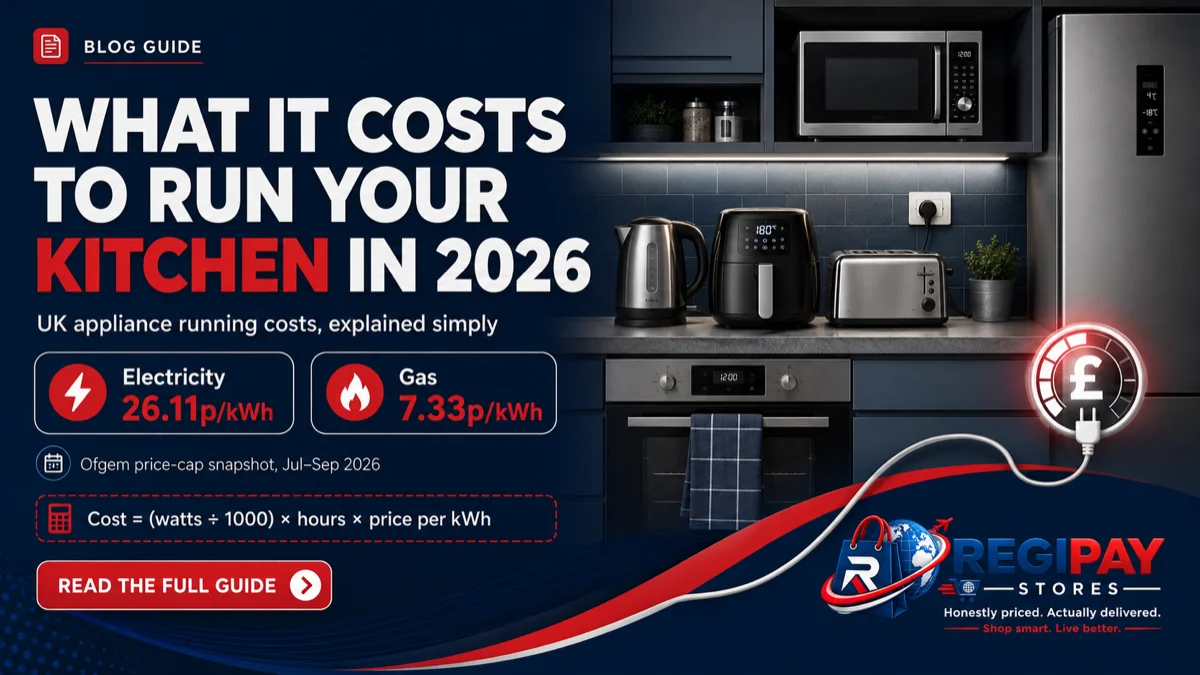
A note on the figures. Everything below uses the Ofgem price cap unit rates for customers paying by direct debit in England, Scotland and Wales for the period 1 July to 30 September 2026: 26.11p per kWh for electricity and 7.33p per kWh for gas, both including VAT. Your own tariff may differ, Northern Ireland has separate arrangements, and the cap is reset quarterly — so treat the method as permanent and the pence as a snapshot.
Last reviewed August 2026, using the Ofgem price cap for 1 July to 30 September 2026. The cap is reset every three months, individual tariffs vary, and Northern Ireland is arranged separately — treat the method here as permanent and the pence as a snapshot, and check your own current unit rate before relying on any figure below.
The formula, and the only number you need
Every electrical appliance has a wattage, usually printed on a label on the back or underneath, or in the manual. That is all you need.
Cost = (watts ÷ 1000) × hours used × price per kWh
Dividing watts by 1000 gives you kilowatts. Multiply by hours to get kilowatt hours, which is the unit you are billed in. Multiply by your unit rate and you have the cost.
A 3,000W kettle running for three minutes: 3 kW × 0.05 hours = 0.15 kWh. At 26.11p, that is 3.9p.
That is the whole thing. Everything else in this article is that sum, applied.
The standing charge nobody mentions
Before the appliances, one figure worth knowing because it is entirely outside your control. The electricity standing charge under the current cap is 57.19p per day, which is about £209 a year whether you switch anything on or not. Gas adds 29.04p a day, roughly £106.
This matters because it reframes the whole exercise. If your electricity bill feels high in a month you were barely home, a fifth of the annual cost was never about usage in the first place.
What each appliance actually costs
Wattages vary between models, so these use typical figures. Check your own label if you want your own number.
| Appliance | Typical power | Typical use | Cost per use |
|---|---|---|---|
| Kettle, full 1 litre | 3,000W | 3 minutes | 3.9p |
| Kettle, one mug | 3,000W | 1 minute | 1.3p |
| Toaster | 1,000W | 3 minutes | 1.3p |
| Microwave | 1,200W draw | 5 minutes | 2.6p |
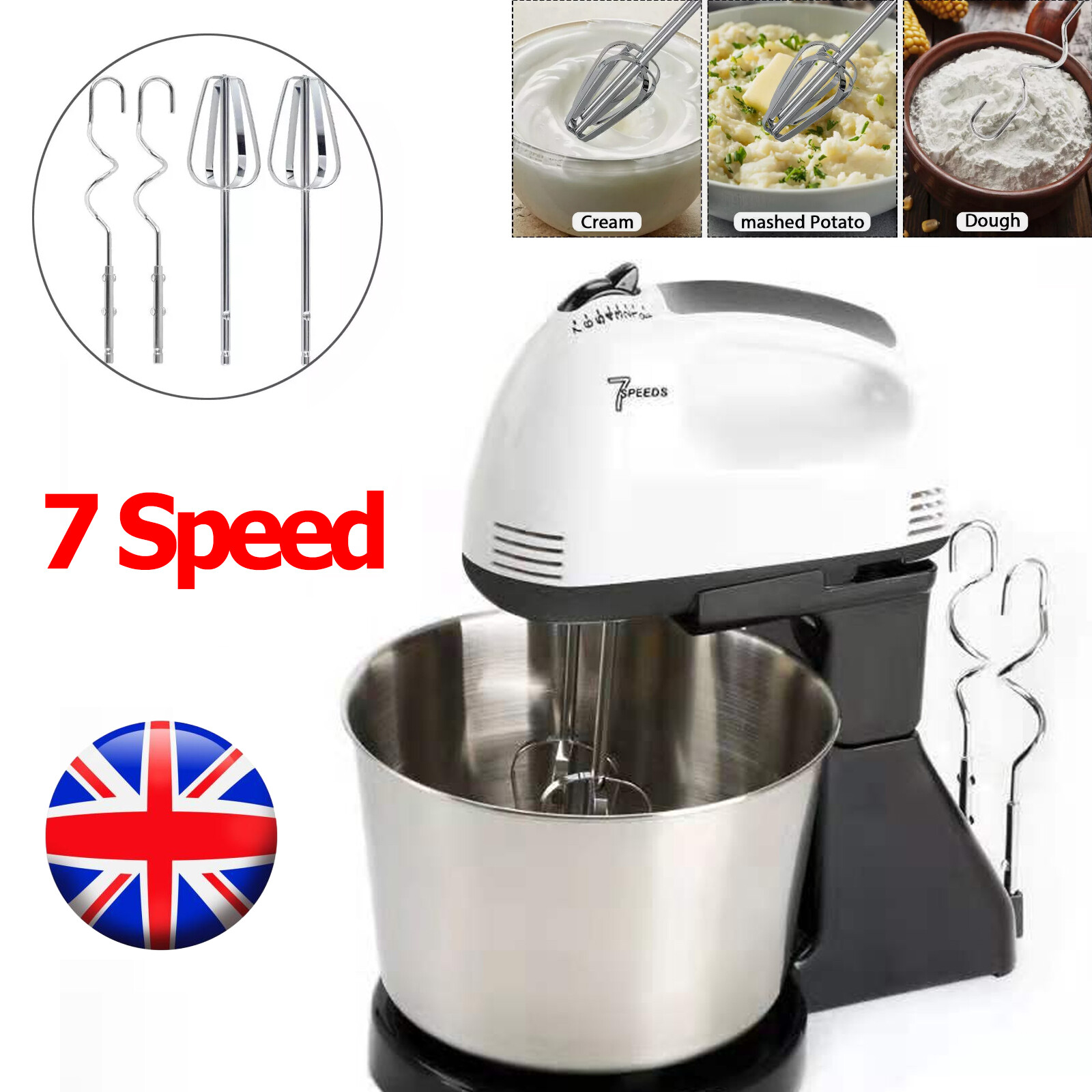
| Stand mixer | 300–1,000W | 10 minutes | 1–4p |
| Air fryer | 1,500W | 20 minutes | 13p |
| Electric hob ring | 2,000W | 20 minutes | 17p |
| Induction hob zone | 2,000W | 15 minutes | 13p |
| Electric fan oven | 2,100W rated | 1 hour | around 37p |
| Slow cooker | 200–250W | 8 hours | 42–52p |
| Dishwasher, eco cycle | — | 1 cycle | around 24p |
| Washing machine at 40°C | — | 1 cycle | around 21p |
| Tumble dryer, condenser | — | 1 cycle | around 65p |
| Tumble dryer, heat pump | — | 1 cycle | around 26p |
| Fridge freezer, efficient | — | 1 year | around £52 |
| Electric shower | 8,500W | 10 minutes | 37p |
A note on the oven. It is rated around 2,100W but the thermostat cycles off once it reaches temperature, so an hour of use draws roughly 1.4 kWh rather than 2.1. This is why measured oven costs are always lower than the rated wattage suggests, and why anyone quoting the rated figure is overstating it.
Five figures that surprise people
The kettle is cheap. Boiling a mug of water costs about 1.3p. The reason kettles feel expensive is that a 3kW draw is enormous, but it only lasts a minute. Power is not cost; power multiplied by time is cost.
The slow cooker is not the bargain it is reputed to be. At 200W to 250W for eight hours it uses more electricity than an air fryer running for twenty minutes, and costs roughly what an hour in the oven does. It is still excellent value per portion when you are cooking a large batch, and it is genuinely cheap compared with an oven running for four hours — but the folklore that it costs pennies is wrong.
The tumble dryer is the most expensive thing in most kitchens. A condenser dryer at around 65p a cycle, three times a week, is roughly £100 a year. A heat pump model is about 40% of that. Nothing else in the room comes close per use.
The fridge freezer costs more than anything else annually. Around £52 a year for an efficient model, because it never stops. It is also the appliance people never think about, precisely because there is no moment where you switch it on.
Standing charges are about a fifth of a low-usage electricity bill. £209 a year before you boil anything.
A baked potato, five ways
The clearest illustration of the arithmetic, because it holds the food constant and changes only the method.
| Method | Energy used | Cost |
|---|---|---|
| Microwave, 10 minutes | 0.2 kWh | 5p |
| Microwave 6 min, then air fryer 10 min to crisp | 0.37 kWh | 10p |
| Gas oven, 1 hour | 1.5 kWh gas | 11p |
| Air fryer, 40 minutes | 1.0 kWh | 26p |
| Electric fan oven, 1 hour | 1.4 kWh | 37p |
The microwave-then-crisp method is the interesting one. It gets you most of the way to an oven result for about a quarter of the cost, and it is the single most useful energy habit in a British kitchen.
The other lesson is that the air fryer's reputation comes from being much cheaper than an electric oven, which it is. It is not cheap in absolute terms, and it loses to a gas oven.
Gas against electricity
At current capped rates, gas costs 7.33p per kWh against electricity at 26.11p. Gas is roughly three and a half times cheaper per unit of energy.
That is not the whole story, because the two deliver heat differently. An induction hob puts around 85% of its energy into the pan; a gas burner loses a great deal of its heat around the sides. An electric fan oven is better insulated and better sealed than most gas ovens. So the efficiency gap narrows the price gap.
On balance, at these rates, gas cooking is still cheaper for ovens and large pans, while induction is competitive for boiling and fast heating and considerably faster. If you have both, the practical rule is: gas for anything slow or large, induction or microwave for anything quick.
Where the savings actually are
In rough order of how much they are worth:
Dry clothes without the dryer where you can. The biggest single lever in most homes. Even halving dryer use saves more than every kitchen habit on this list combined.
Use the smallest appliance that will do the job. Microwave over air fryer, air fryer over oven, kettle over hob. An oven heating 60 litres of air to bake one potato is the clearest waste in any kitchen.
Batch cook when the oven is already on. The oven costs the same whether it contains one tray or three. Filling it is free, and it is the one habit that makes a larger mixing bowl or dough kneader pay for itself.
Boil only what you need. Filling a kettle for one mug roughly triples the cost of that cup.
Use lids on pans. Genuinely halves the energy for boiling, and costs nothing.
Run the dishwasher on eco, full. Eco cycles use less energy despite running longer, and a full machine uses less water and power than washing the same load by hand.
Check the fridge is not working harder than it needs to. Set to about 4°C, seals intact, coils at the back not dusty, and not pushed hard against a wall or standing next to the oven.
What barely matters
Standby power on kitchen appliances. Modern regulations cap it at very low levels, and unplugging a microwave overnight saves a fraction of a penny.
Kettle descaling, for energy purposes. It is worth doing for the taste and the life of the element, but limescale has a negligible effect on the electricity used.
The wattage of a stand mixer or a blender. They draw meaningful power but run for minutes, so the cost per use is one to four pence. Buy on build quality and bowl size rather than on running cost — that is one appliance where the energy question is genuinely irrelevant.
Turning the oven off five minutes early. Real, but worth under a penny.
Frequently asked questions
How much does it cost to boil a kettle in the UK?
About 3.9p for a full litre and 1.3p for a single mug, at the current capped electricity rate of 26.11p per kWh. A 3kW kettle uses a lot of power but only for a couple of minutes, which is why the cost is low despite the high wattage.
Is an air fryer cheaper than an oven?
Yes, substantially, against an electric oven: roughly 13p for twenty minutes against about 37p for an hour of oven time. Against a gas oven the picture reverses, because gas costs about a third of what electricity does per unit.
Are slow cookers actually cheap to run?
Cheaper than an oven for the same length of cooking, but not as cheap as their reputation suggests. Eight hours at 200W to 250W costs roughly 42p to 52p, which is more than an air fryer uses in twenty minutes. Where they win is cost per portion on a large batch.
What is the most expensive appliance in a kitchen?
Per use, the tumble dryer, at around 65p a cycle for a condenser model. Per year, the fridge freezer, at around £52, because it runs continuously. Ovens sit between the two.
How do I work out what my own appliance costs?
Find the wattage on the label, divide by 1,000, multiply by the hours you use it for, then multiply by your own unit rate in pence. A 1,500W air fryer for half an hour is 1.5 × 0.5 × 26.11, which is about 20p.
Using the numbers
The three habits worth actually adopting are: reach for the smallest appliance that will do the job, fill the oven whenever it is on, and get clothes dry without the dryer wherever the weather allows. Everything else on this page is worth pennies, and knowing which is which is the point of learning the formula rather than the list.