
A Nigerian store cupboard in a British kitchen divides into two halves, and getting that division right is most of the skill. One half keeps for a year or more and is far cheaper in big bags: garri, pounded yam flour, rice, dried beans, tinned tomatoes, noodles, malt drinks, palm oil. The other half goes stale, rancid or damp within weeks of opening, and buying it in bulk is paying to throw food away later: ground egusi, ogbono, ground crayfish, curry powder, dried herbs, groundnut oil.
This guide covers the list by function, a decision table of pack sizes and realistic shelf life, the bulk maths, and how to store any of it in a small, damp British kitchen.
Last reviewed September 2026. Prices, pack sizes and availability change, so confirm the current price on the product page before ordering.
The two halves of the cupboard
The things that survive bulk buying are dry, low in oil and coarse rather than powdered: whole grains, cassava flakes, hard dried fish, tinned goods. Their price per kilogram drops sharply as the bag gets bigger.
The things that do not survive it are ground, oily or aromatic. Egusi is a seed with a high fat content, so once milled it starts to turn. Ogbono loses the draw that is the entire point of it. Ground spices lose their smell first and their flavour shortly after. A third category keeps well but goes so slowly the bag outlives your interest in it: if you make ofe achi three times a year, a large bag is still the wrong purchase.
The core cupboard, item by item
The swallows and starches
Garri is the backbone. White garri is neutral, for eba and for soaking; Ijebu garri is sourer, drier and swells less, so it takes more per bowl of eba, and yellow garri has palm oil worked through it. A household eating swallow two or three times a week gets through 4kg in two to three months, which makes a 4kg bag of Ijebu garri, like the one in our Ijebu Garri & Poundo Essentials bundle, a sensible size rather than an ambitious one. Bulk: yes, if the container is genuinely airtight.
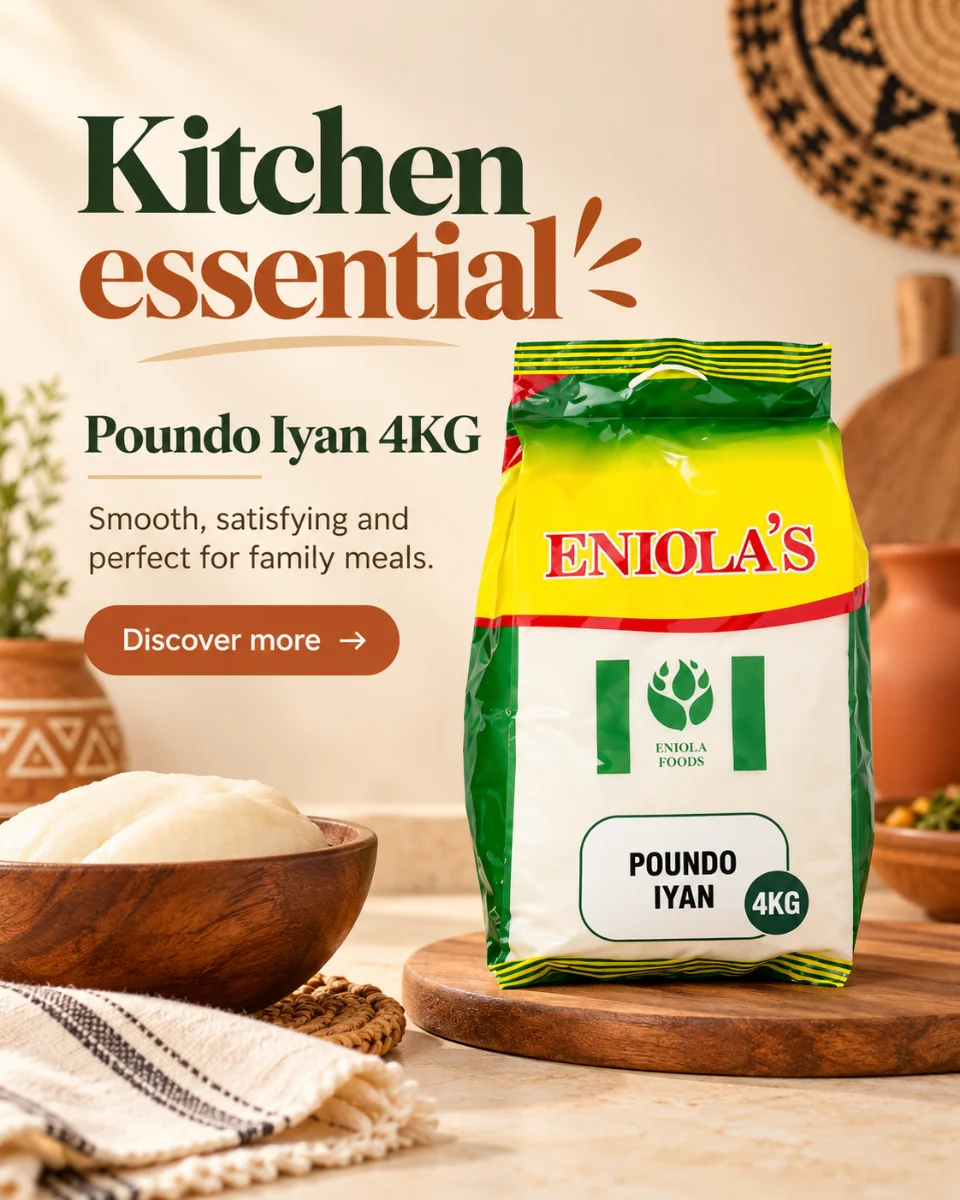
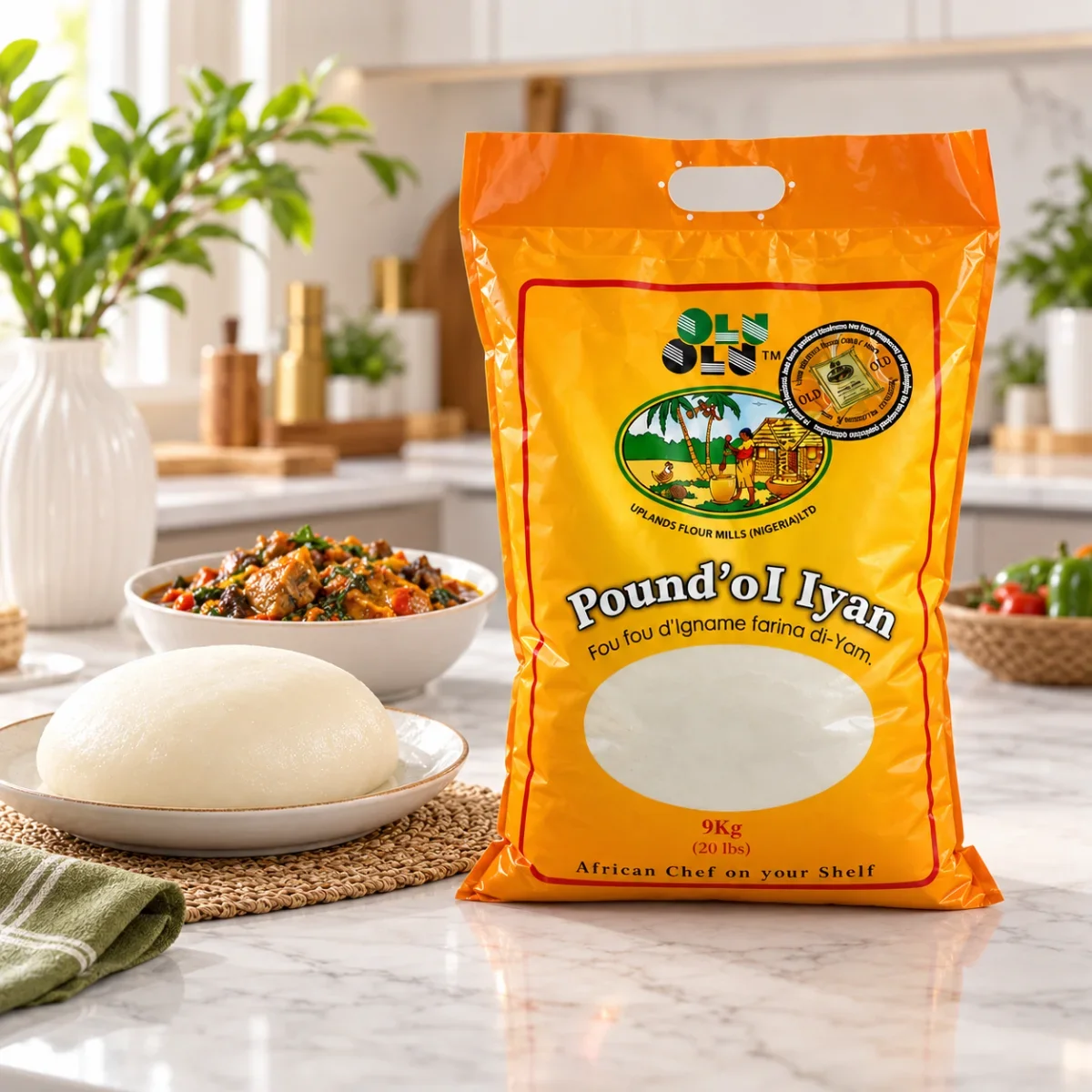
Poundo is dried yam milled fine, a smoother and milder swallow with none of the pounding, as covered in our guide to pounded yam with poundo flour. It is heavier per serving than garri, so Olu Olu Poundo Iyan Pounded Yam Flour 4kg is a two to three month bag for a family. Bulk: yes. Semolina is cheap in British supermarkets and not worth importing; plantain flour goes slowly and picks up damp, so buy it small.
The soup thickeners
Egusi is ground melon seed. Whole seeds keep the best part of a year sealed; ground egusi does not, because milling exposes the oil to air, and after a couple of months it smells flat and faintly sharp. Cook egusi weekly and whole seed, ground as you go, is the better buy; cook it occasionally and small packets earn their higher price.
Ogbono, ground wild mango seed, is bought for the draw, and the draw fades: a large bag still thickens at month eight, but nothing like as well. Achi, the thickener behind ofe achi, keeps well enough but goes in small quantities. Bulk: no to both.
The oils
Red palm oil is pressed from the fruit of the oil palm rather than the kernel, and its colour comes from carotenoids in the fruit. It is semi-solid at British room temperature, so a bottle that has gone grainy, cloudy or fully set in a cold kitchen is normal rather than spoiled. It keeps very well, which makes Banga Red Palm Oil 4 litres worth the shelf space if you cook stews, banga and ofe regularly. Do not heat it hard: unrefined palm oil loses the colour and flavour you paid for when pushed to smoking. Palm oil sourcing is environmentally contentious, which is worth weighing up before buying in volume. Bulk: yes, if you decant a working bottle and keep the main container shut.
Groundnut oil does the opposite. It oxidises, and a large drum above a warm hob tastes stale long before it is finished. Buy what you will use in two or three months. Bulk: no.
The proteins and the umami
Stockfish, okporoko, is air-dried cod and the most durable thing in the cupboard, effectively indefinite when kept dry. Whole pieces keep better than pre-shredded, which picks up moisture. Dried fish such as panla or catfish is softer and more absorbent, goes limp and can mould in a damp cupboard, so seal it and check it.
Crayfish gives the savoury base note in almost every soup, and whole dried crayfish keeps far better than ground, so grind a week's worth at a time. Iru, fermented locust bean, does not belong in a cupboard at all: wet iru lives in the freezer in small portions, and dried iru is best kept there once opened.
The peppers and the aromatics
Dried chilli, in flakes or milled to pepper powder, is the base heat for stews. It keeps the best part of a year but loses aroma steadily, so a mid-size bag beats a sack. Ata rodo, scotch bonnet, is a fresh ingredient, dealt with further down. Uziza comes as dried leaves for soups and as seeds with a black pepper character; ehuru, calabash nutmeg, is toasted whole for pepper soup and nkwobi. Both go in tiny amounts, so buy small.
Curry powder and dried thyme do not mean in a Nigerian kitchen what they mean in a British one. The curry is a mild, yellow, turmeric-forward blend used by the tablespoon in jollof and stews rather than the teaspoon, with thyme alongside it almost everywhere. You get through more of both than a British recipe suggests, but they still fade, so a medium tub beats a catering tin.
The rice, grains and beans
Long grain parboiled rice is the standard for jollof because the grains stay separate. It stores well sealed in bulk, and it is one of the few items where a British supermarket often matches a specialist order. Ofada rice is short and unpolished, so buy what you will cook. Honey beans, oloyin, and black eye beans keep a year or more dry, but they are the item most likely to develop weevils.
The drinks and the extras
Tinned plum tomatoes, purée and stock cubes are the base of the stew pot and shelf stable for years, so a case is straightforward. Instant noodles are the same, and a box like Indomie Instant Noodles Chicken Flavour, 40 x 70g sits happily on top of a wardrobe; its label declares cereals containing gluten and soya. Malta Guinness, 24 x 330ml is a non-alcoholic malt drink brewed from malted barley by Guinness Nigeria and launched there in the 1980s, dark and sweet with caramel and molasses notes. It is high in sugar for its size, so treat it as a sweet soft drink, and its label also declares cereals containing gluten.
The decision table
Shelf life below is the realistic figure once a pack is opened and stored in an ordinary British kitchen cupboard, not the printed date on an unopened bag.
| Item | Pack size worth buying | Realistic life once opened | Buy in bulk |
|---|---|---|---|
| White or Ijebu garri | 4kg | 6 to 9 months airtight | Yes |
| Poundo / yam flour | 4kg | 6 months airtight | Yes |
| Semolina | 1kg to 1.5kg | 6 months | No, buy locally |
| Plantain flour | 500g to 1kg | 3 to 4 months | No |
| Egusi, whole seed | 1kg | About a year | Yes |
| Egusi, ground | 250g to 500g | 6 to 10 weeks | No |
| Ogbono, ground | 250g | 3 months for good draw | No |
| Achi | 250g | 6 months | Only if cooked often |
| Red palm oil | 4 litres | 9 to 12 months | Yes |
| Groundnut oil | 1 to 2 litres | 2 to 3 months | No |
| Stockfish | As the budget allows | Very long if kept dry | Yes |
| Dried fish, panla | 250g to 500g | 2 to 3 months | Only if sealed well |
| Crayfish, whole | 500g | 6 months | Yes |
| Crayfish, ground | 100g to 250g | 4 to 6 weeks | No |
| Iru, locust bean | Small, frozen | Months in a freezer | Only with freezer space |
| Dried chilli, pepper powder | 500g | 6 to 9 months for aroma | Only if used weekly |
| Uziza, ehuru | 50g to 100g | 6 months whole | No |
| Curry powder, dried thyme | 100g to 200g | 3 to 4 months for flavour | No |
| Parboiled long grain rice | 5kg to 10kg | A year sealed | Yes |
| Beans, oloyin or black eye | 2kg to 4kg | A year sealed | Yes |
| Tinned tomatoes and purée | Case | Years unopened | Yes |
| Instant noodles | Box of 40 | Months, check the date | Yes |
| Malt drinks | Box of 24 | Months, check the date | Yes |
The bulk maths, done honestly
Work in price per kilogram or per litre rather than price per pack, because that is the only number that tells you anything. At the time of writing (October 2026), the 4kg Ijebu garri is £13.99, about £3.50 a kilogram. The 4kg poundo flour is £28.99, roughly £7.25 a kilogram, a reminder that yam flour is a genuinely more expensive food than cassava, not just a bigger bag. The 4 litre palm oil is £23.99, or £6.00 a litre. The box of 40 Indomie is £20.99, about 52p a packet, and the box of 24 Malta Guinness is £28.99, about £1.21 a can. Check the product pages before ordering, because prices move.
The second half of the sum is delivery, where people lose money without noticing. Standard UK delivery is £7.99 and orders of £100 or more go free. Garri, poundo and palm oil together come to £66.97 at the time of writing, so £74.96 delivered. Add the Indomie box and you are at £87.96, or £95.95 delivered, which is the worst possible place to stop.
That only works if you would have bought those things anyway. Adding something you did not want in order to save the £7.99 is not a saving, and a bag thrown away at month ten has cost its full price, not its discounted one. The test for any bulk purchase is one question: will it be finished before it stops being good?
Storing it in a British kitchen
British kitchens are small, warm in patches, cold in others, and damp. There is rarely an outdoor store, cupboards back onto external walls, and the washing machine is often in the room.
Garri is the clearest case. It is hygroscopic, meaning it pulls moisture out of the air, and once it does it loses its crispness, clumps and eventually goes off. Poundo flour, plantain flour and ground egusi do the same to a lesser degree. The fix is dull and it works: decant everything into airtight containers with a gasket seal on the day it arrives, and keep them away from the kettle, the hob and the tumble dryer.
The fridge is a trap. It feels like the safe option for flour and is the opposite, because every time the door opens, warm room air meets cold packaging and condenses on it. Cool, dark and dry beats cold. The freezer is useful, but only for iru, fresh peppers and ground spices portioned in advance.
Weevils in beans and rice
Weevils usually arrive as eggs already in the grain rather than marching in from the garden, so a clean kitchen is not by itself protection. What actually helps:
- Freeze new bags of beans or rice for three to four days before decanting, which kills eggs and larvae.
- Store in glass or rigid plastic with a gasket seal, not the sack it came in.
- Keep bags off the floor and away from external walls, where damp collects.
- Buy sizes you will finish within a year, and use the oldest container first.
- Check every few weeks, so a small problem does not become the whole bag.
Finding room for a 4kg bag
Split it. Fill a 1kg jar for the worktop and seal the rest in a large container somewhere cool and out of the way: the bottom of a wardrobe, a hallway cupboard, or a box under the bed. The rule is dry and stable in temperature, not close to the cooker. Rigid stacking containers use vertical space far better than half-collapsed bags, and a dated label saves guessing later.
Starting from nothing
If you have just moved into a flat, buy in this order rather than assembling everything at once. Our first UK flat checklist covers the pots, storage and kit side of the same problem.
- Rice, tinned tomatoes and purée, stock cubes, dried chilli and an everyday oil, which alone gets you jollof and stew.
- One swallow. Pick garri or poundo, not both, and see which you reach for.
- Red palm oil and crayfish, the point where food starts tasting like home.
- Beans, and dried fish or stockfish if you eat them.
- One thickener, bought small, for the soup you cook most.
- The aromatics: curry, thyme, uziza, ehuru, in small packets.
- Noodles and malt drinks, bought for pleasure rather than need.
Airtight containers belong at step one, not step seven: buying 4kg of anything before you have somewhere to keep it is how the first bag gets ruined.
Where ordering online stops making sense
Plenty of this list is better bought elsewhere. Fresh ata rodo, ugu, bitterleaf, waterleaf, ewedu, plantain and yam tubers are things you want to see and handle, and they do not travel well through a parcel network. A local African or Caribbean shop will beat any online order on those, and on frozen goat, shaki, ponmo and fresh fish it is not close.
Supermarkets win the boring middle of the list. Rice, semolina, tinned tomatoes, cooking oil, onions and flour are cheap and everywhere, and paying delivery on them makes no sense. Ordering online earns its place on the heavy, shelf stable things your supermarket does not stock and you would rather not carry home on a bus: 4kg bags, 4 litre oil, cases of drinks. That is roughly how the African and Caribbean groceries range here is put together.
Frequently asked questions
What should be on a Nigerian food shopping list in the UK?
The working core is garri or poundo flour, parboiled long grain rice, beans, red palm oil, a frying oil, crayfish, dried chilli, curry powder, thyme, stock cubes, tinned tomatoes and one soup thickener. Everything after that depends on what you actually cook. Fresh peppers, greens and meat are better bought locally.
Is it cheaper to buy Nigerian food in bulk?
Yes for dry, coarse, shelf stable items, and no for anything ground or oily. Large bags of garri or yam flour and a 4 litre container of palm oil work out substantially cheaper per kilogram or litre than small packs and keep long enough to justify it. Ground egusi, ogbono, crayfish and spices lose quality faster than you will get through a big bag.
How do I stop weevils getting into beans and rice?
Freeze the bag for three to four days when it arrives, then decant into a sealed rigid container. The eggs are usually already in the grain when you buy it, so freezing at the start prevents an infestation rather than cleaning up after one. Check every few weeks and use older stock first.
Why has my red palm oil gone solid and grainy?
That is normal. Red palm oil is semi-solid at British room temperature and sets, clouds or turns grainy in a cold kitchen without being spoiled. Stand the container somewhere warm and it will liquefy again.
Is Nigerian food healthy?
That depends on what you cook and how much of it, and it is not a question a shop should answer for you. Malt drinks are high in sugar, palm oil is a fat, and swallow is mainly carbohydrate, which are facts rather than judgements. For guidance on your own diet, speak to a GP, pharmacist or registered dietitian.
Getting the first order right
If you are building the cupboard from scratch, the two bags that do the most work are a swallow and an oil. The Ijebu Garri & Poundo Essentials bundle and the Banga Red Palm Oil 4 litres between them cover eba, stews, soups and most weeknight cooking, and both keep well enough to justify the size. Buy the airtight containers at the same time, confirm the current prices on the product pages, and add ground items only in quantities you will finish.