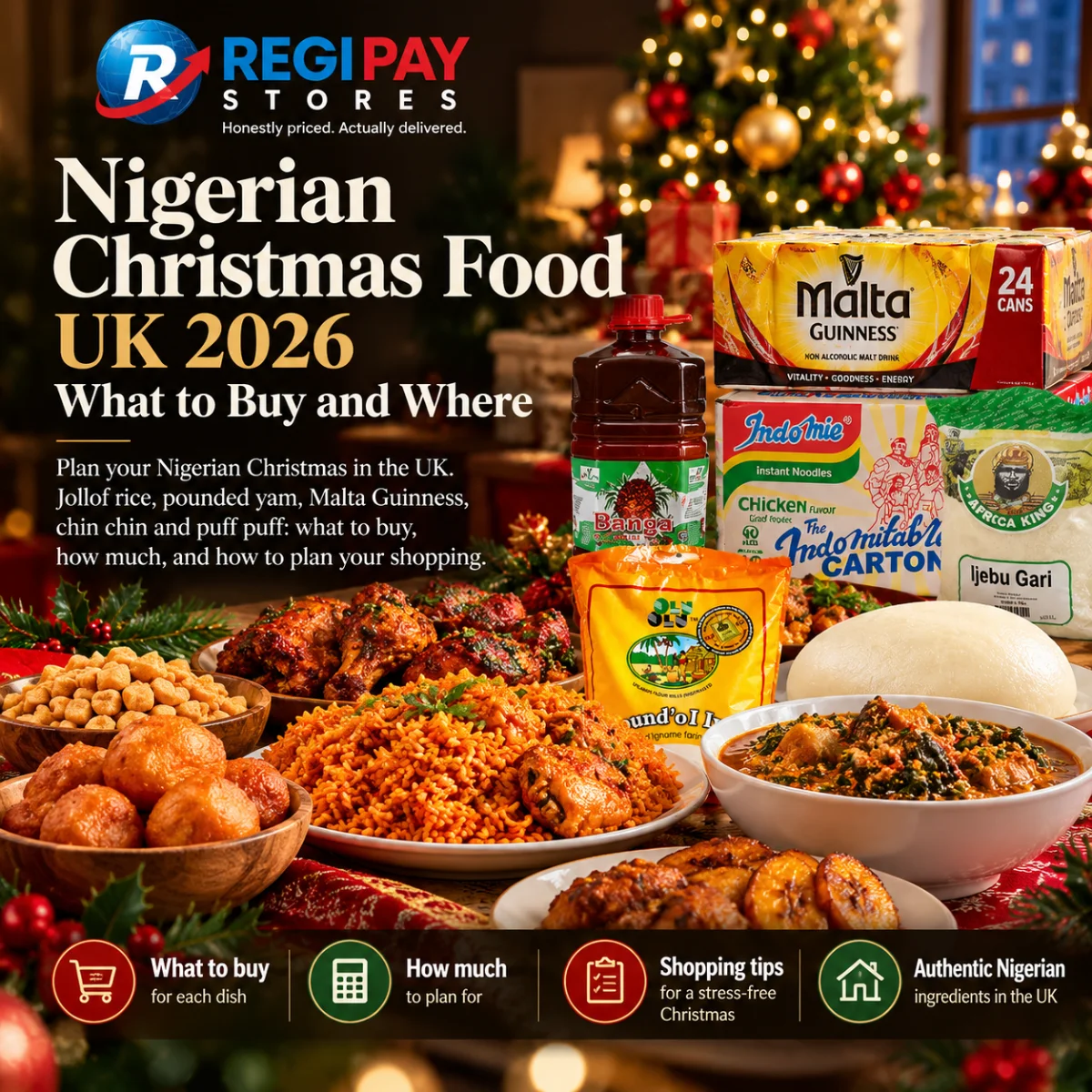
For many families, Nigerian Christmas food in the UK is the one meal of the year that has to taste exactly like home. The house fills with the smell of party jollof, someone is frying chicken in batches, a big pot of egusi is on the back burner, there is a tray of chin chin cooling by the window, and the fridge is packed with Malta Guinness. Cousins arrive from Peckham, Manchester and Birmingham, and the question is always the same: "Is there enough food?"
This guide is a practical plan for a Nigerian Christmas in a British home. It covers the dishes most families serve, exactly what to buy for each, how much to plan for, and how to organise your shopping so you are not hunting for palm oil on Christmas Eve.
Christmas in Nigerian UK households
Christmas in Nigeria is a big, social, food-centred celebration. Many families travel home to their villages, churches hold long services, and food is cooked in large quantities because visitors drop in all day. Rice and stew, jollof, fried rice, chicken, goat meat and drinks are expected.
In the UK, the traditions adapt. Some families serve a full Nigerian spread; others combine a British roast with jollof rice and fried plantain on the side. Many hold a big gathering on Boxing Day or the weekend after Christmas. Whatever your style, the shopping list overlaps more than you might think.
The essential Nigerian Christmas foods
Jollof rice
There is no Nigerian Christmas without jollof. Party jollof, cooked in large pots with a slightly smoky base, is the centrepiece.
What you need: long-grain parboiled rice, tomatoes, tinned plum tomatoes or tomato purée, red bell peppers (tatashe), scotch bonnets, onions, vegetable oil, stock cubes, curry powder, dried thyme, bay leaves, and stock from your chicken or meat. Some cooks add a spoon of butter at the end.
How much: as a rough guide, plan about 100g of uncooked rice per adult for a main portion, more if jollof is the only carbohydrate and less if you are serving several dishes.
Tip: blend and fry your pepper base (obe ata) a day or two ahead and keep it in the fridge. It saves a lot of time on the day.
Fried rice
Nigerian fried rice often sits next to jollof on the party table. You need parboiled rice, mixed vegetables (carrots, peas, green beans, sweetcorn), liver or prawns if you like, curry powder, thyme, stock and spring onions.
Pounded yam and egusi soup
For many Yoruba and Igbo families, a proper swallow and soup is part of the Christmas spread, especially for older relatives.
What you need for egusi: ground egusi (melon seeds), red palm oil, leafy greens (spinach, ugu or bitterleaf), crayfish, stockfish or dried fish, your choice of meat, onions, scotch bonnet and stock cubes.
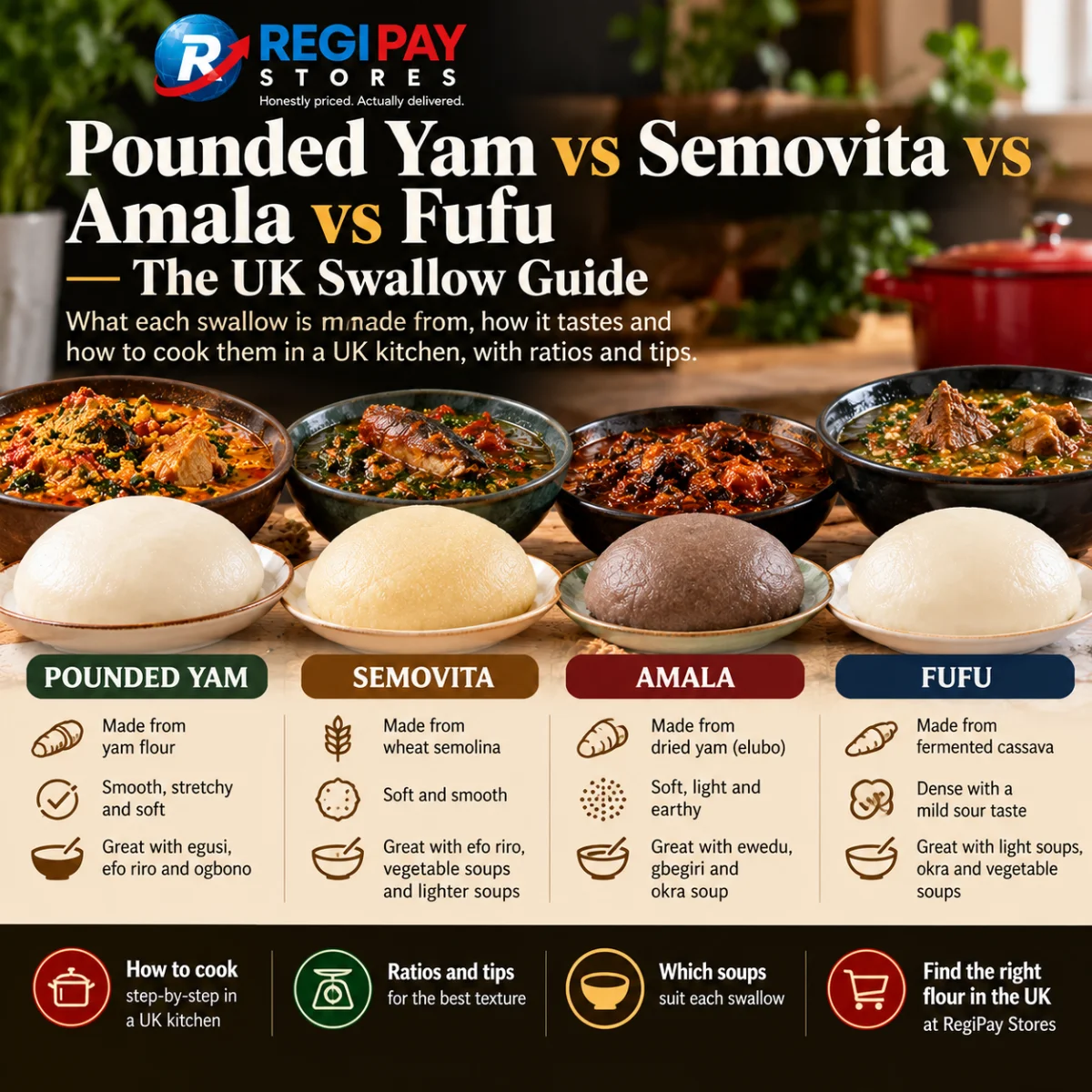
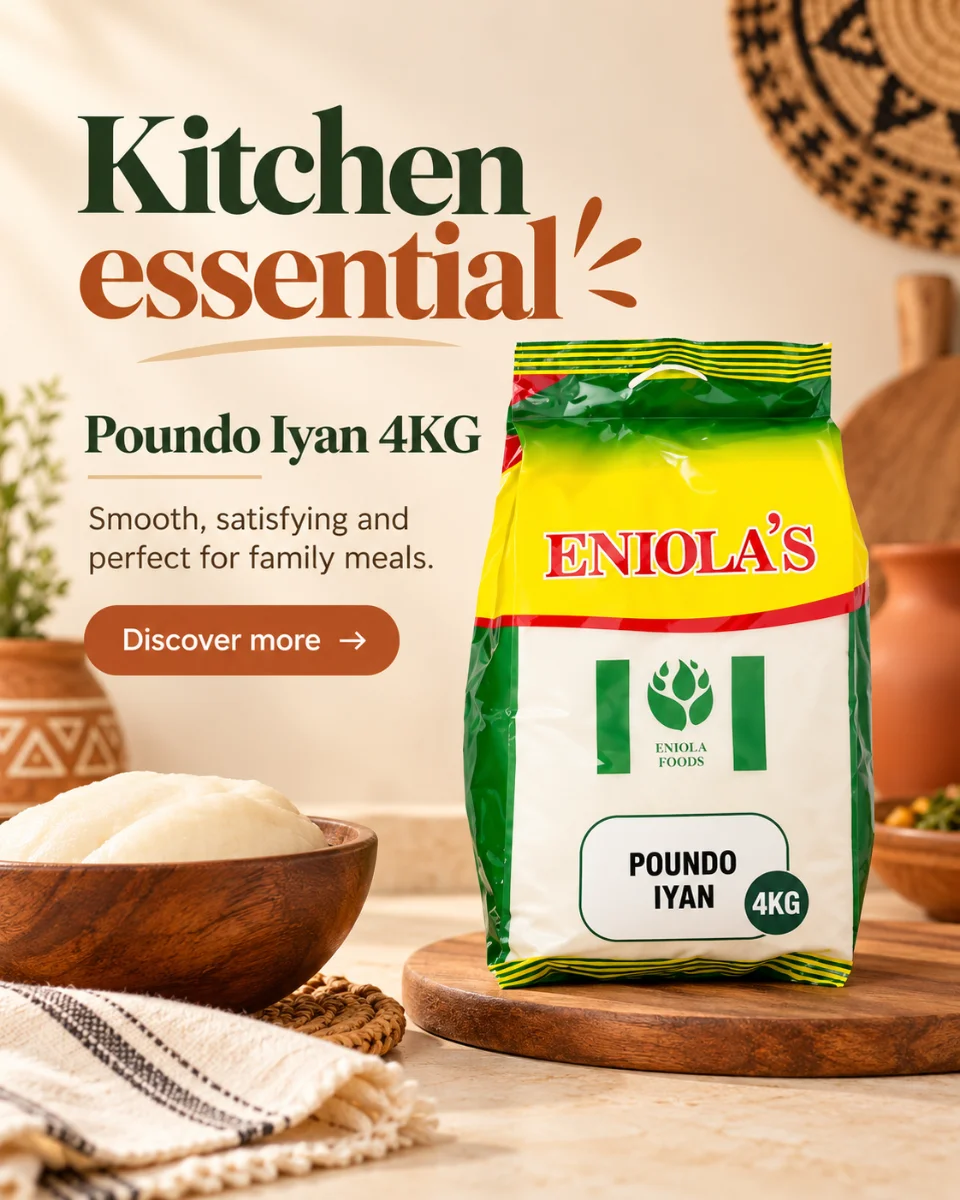
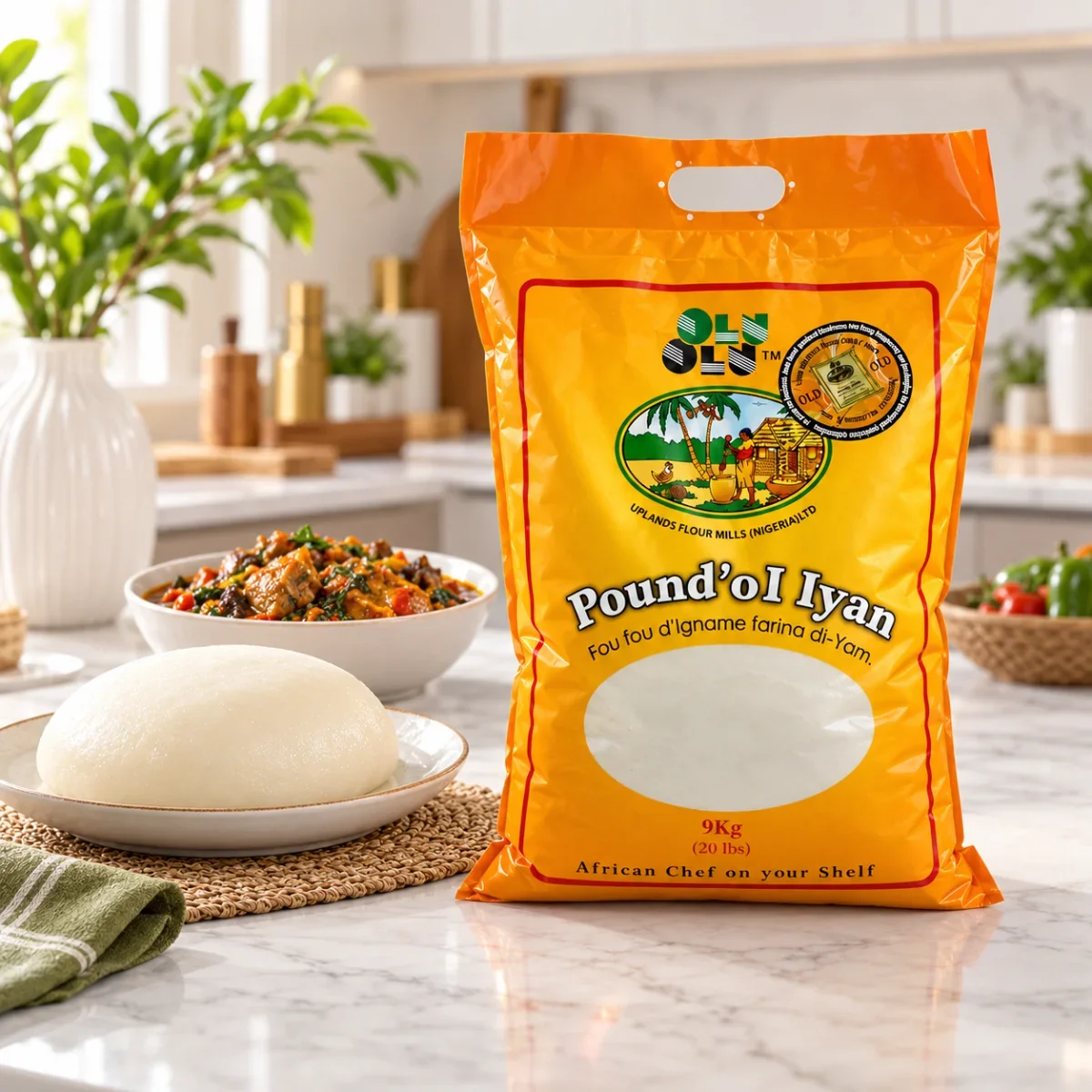
What you need for the swallow: pounded yam flour (poundo iyan) is the easiest option in a British kitchen. Plan roughly 100g to 150g of flour per adult portion. Garri for eba is a good second swallow for guests who prefer it.
Chicken, goat meat and turkey
Fried or grilled chicken is almost compulsory. Many families also cook goat meat in pepper sauce, or adapt the British turkey with Nigerian seasoning. Season the meat a day ahead with onions, garlic, ginger, thyme, curry powder and stock cubes, boil to tenderise, then fry or grill.
Small chops
Small chops are the party snacks that disappear first: puff puff, spring rolls, samosas, peppered gizzard, chicken wings and sometimes mini sausage rolls. If you are short on time, buy frozen spring rolls and samosas and make the puff puff fresh.
Puff puff
Puff puff is a soft, deep-fried dough ball made from flour, yeast, sugar, a pinch of salt and nutmeg. It is not a cake, but it is one of the most loved sweet treats at Nigerian celebrations and is often served alongside the small chops. Make the batter, leave it to rise in a warm spot (an airing cupboard works well in a British winter), then fry spoonfuls until golden.
Christmas cake
Many Nigerian homes also serve a rich fruit cake at Christmas, often heavier and more generously spiced than a British one, sometimes soaked with a little wine or juice. Some families bake their own; others order one from a Nigerian baker in their area.
Chin chin
Chin chin is the crunchy fried dough snack that sits in bowls all over the house through the holidays. It is made with flour, sugar, butter or margarine, evaporated milk, eggs and nutmeg, cut into small cubes and fried. A big batch made the week before Christmas keeps well in airtight tins.
Plantain
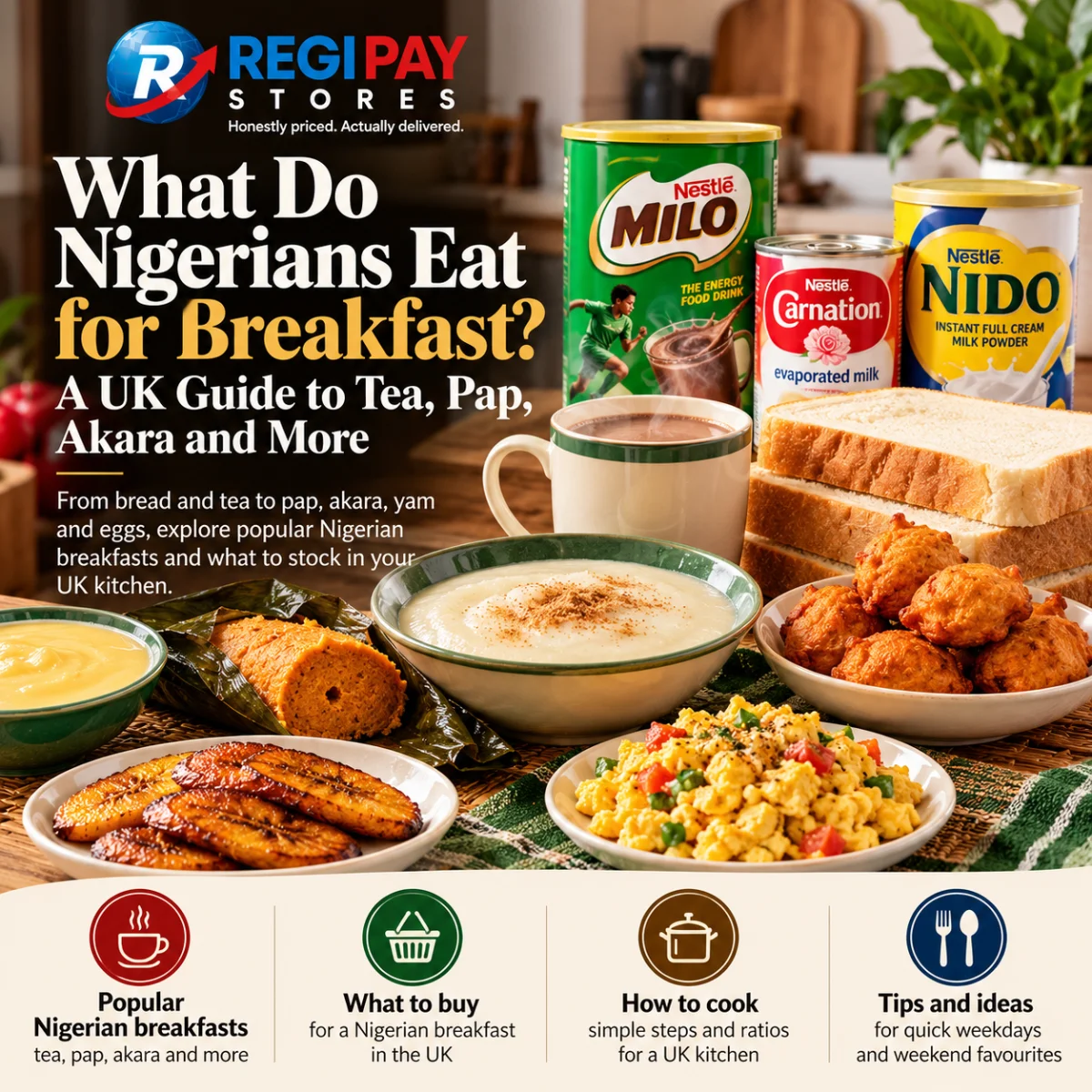
Fried plantain (dodo) goes with everything: jollof, fried rice, chicken and beans. Buy plantain about a week ahead so it has time to ripen to yellow with black spots. For guests who want something to nibble, plantain chips are an easy, no-cook alternative.
Drinks: Malta Guinness and more
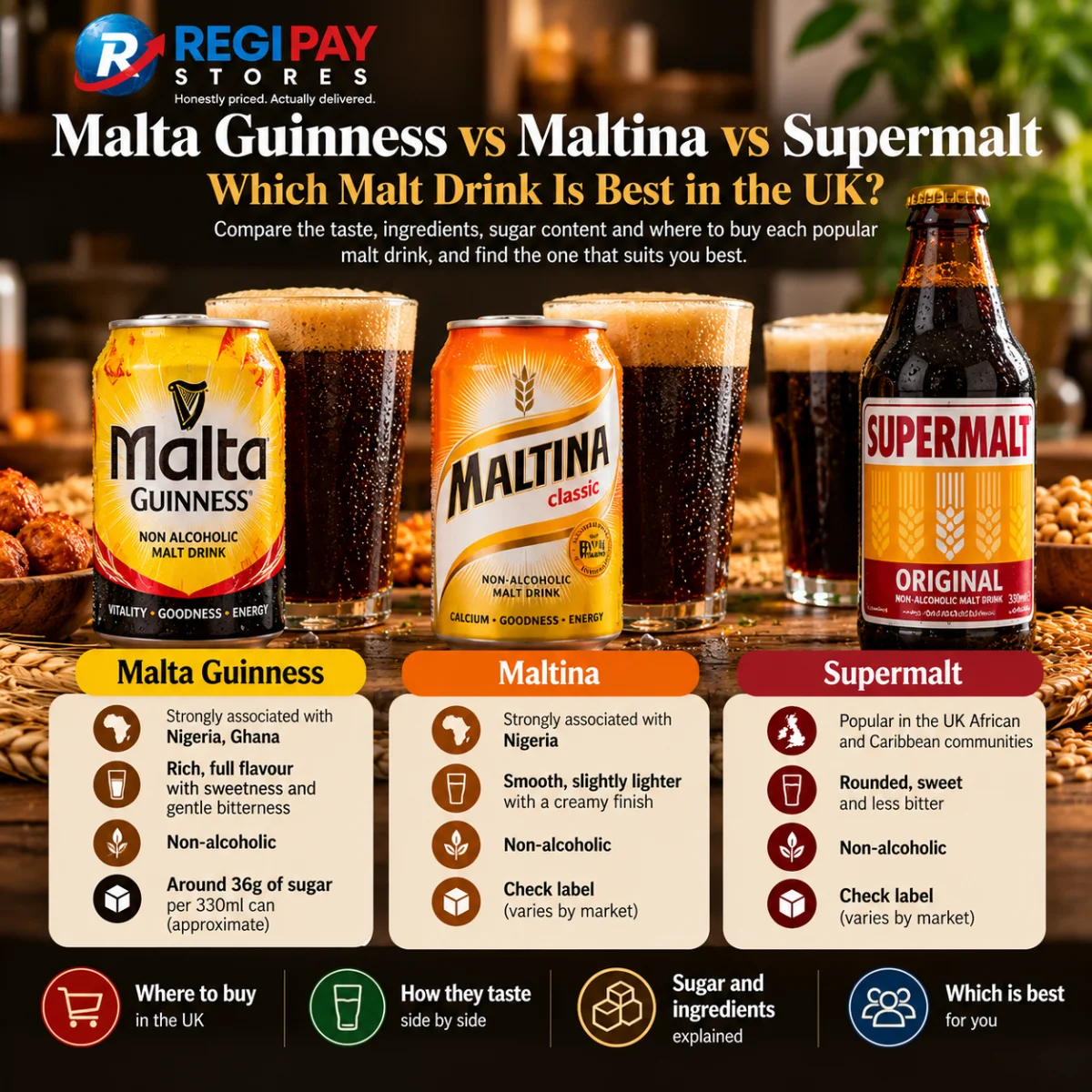
Malta Guinness is the drink of Nigerian celebrations. It is non-alcoholic, which makes it suitable for children and for guests who do not drink, and it pairs well with spicy food. Many families also serve zobo (hibiscus drink), Chapman, soft drinks and juice.
How much: for a family gathering, plan on roughly one to two cans of malt per guest across the day, plus water and other soft drinks.
For more on malt drinks, see our guide to Malta Guinness explained.
The Nigerian Christmas shopping checklist
Use this as your master list and tick off what you already have.
Store cupboard (buy early):
- Long-grain parboiled rice
- Pounded yam flour and garri
- Red palm oil
- Vegetable oil for frying
- Ground egusi
- Crayfish and stockfish or dried fish
- Stock cubes, curry powder, dried thyme, bay leaves, nutmeg
- Tinned tomatoes and tomato purée
- Plain flour, yeast, sugar and evaporated milk (for puff puff and chin chin)
- Indomie noodles (for quick meals for visiting cousins)
- Malta Guinness and other drinks
- Plantain chips for snacking
Fresh (buy in the last week):
- Plantain (a week ahead, to ripen)
- Peppers, scotch bonnets, onions, tomatoes, garlic, ginger
- Leafy greens for egusi
- Chicken, goat meat or turkey
- Eggs and butter
How to plan ahead for Christmas
The week before Christmas is the busiest time of year for African grocers and couriers alike, and popular items can run low in local shops. A simple plan avoids stress:
- Late November: decide your menu and guest numbers. Write your shopping list using the checklist above.
- Early December: order store-cupboard items such as rice, flour, palm oil, garri, egusi, noodles and drinks. These keep well, so there is no reason to wait.
- Mid-December: order or book anything you are buying from a caterer or baker, such as a cake or small chops.
- Week before Christmas: buy plantain and fresh meat; make chin chin and your pepper base.
- Two days before: season and boil meat; prepare egusi.
- Christmas Eve: cook jollof and fried rice; fry plantain and puff puff on the day.
When ordering online, check the delivery window shown on each product page before you buy, and order store-cupboard items early so they arrive with time to spare.
Where to buy Nigerian Christmas food in the UK
You have three main options:
- Local African and Caribbean grocers: best for fresh produce, meat and fish, and for picking up last-minute items. Busy in December, so go early in the day.
- Supermarket world food aisles: useful for rice, tinned tomatoes, some spices and occasionally plantain and Malta Guinness in small packs.
- Online African grocery stores: the easiest way to buy heavy store-cupboard items in bulk, such as 4kg bags of poundo and garri, large bottles of palm oil and full cases of drinks, without carrying them home.
Cooking for a crowd: quantities at a glance
If you are hosting 15 to 20 people, these rough quantities are a sensible starting point. Adjust for appetites and for how many other dishes you are serving.
- Rice for jollof and fried rice combined: about 2kg uncooked
- Chicken: two to three whole birds, or around 4kg of thighs and drumsticks
- Pounded yam flour: about 2kg, plus a bag of garri for eba
- Egusi: one large pot made with roughly 500g of ground egusi
- Plantain: 10 to 15 ripe plantains
- Puff puff: a batch made with 1kg of flour
- Drinks: a case of 24 Malta Guinness, plus water, juice and soft drinks
Leftover jollof, stew and egusi all freeze well in portions, so it is better to cook slightly more than you need than to run out while guests are still arriving.
Keeping it manageable
A Nigerian Christmas is about generosity, but it does not have to be exhausting. Share the cooking: one relative brings the fried rice, another the small chops. Batch-cook and freeze stew and egusi in advance. And remember that a pot of jollof, a tray of chicken and a cold Malta will make most guests happy.
Stocking up for Christmas
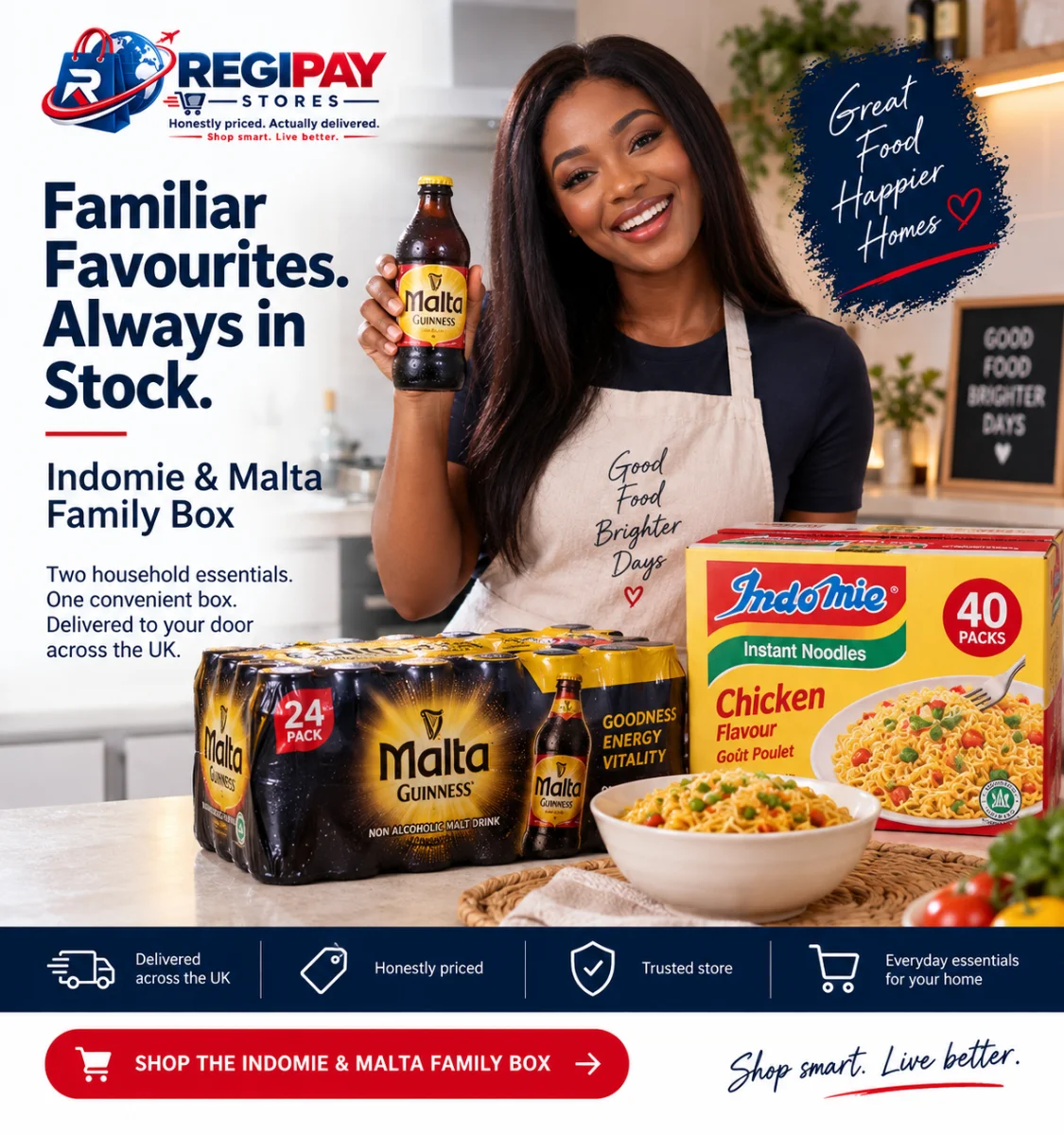
If you would like to get the heavy store-cupboard items sorted in one go, a few products cover most of the list. The Malta Guinness case of 24 keeps the drinks covered for a family gathering, and the Olu Olu Plantain Chips box is an easy snack to put out for guests. The Indomie Chicken box of 40 is handy for quick meals while relatives are staying, and the West African Pantry Starter brings garri, pounded yam flour, palm oil and Indomie together for the swallow-and-soup side of the menu.