Ask anyone who grew up eating pounded yam what the best pounded yam flour in the UK is, and you will usually get a brand name, a story about a mother or aunt who refused to buy anything else, and a strong warning about "that one that turns to glue". The search for the best pounded yam flour UK shoppers can buy is a real one, because the bag you pick decides whether Sunday lunch is smooth and stretchy or lumpy and heavy.
This guide looks at the brands you are most likely to see on UK shelves and websites, explains what actually makes one flour better than another, and gives you a simple way to judge any bag yourself. It is written for the Nigerian and wider West African community in the UK, but it is just as useful if you are cooking pounded yam for the first time.
Why pounded yam flour matters so much in the UK
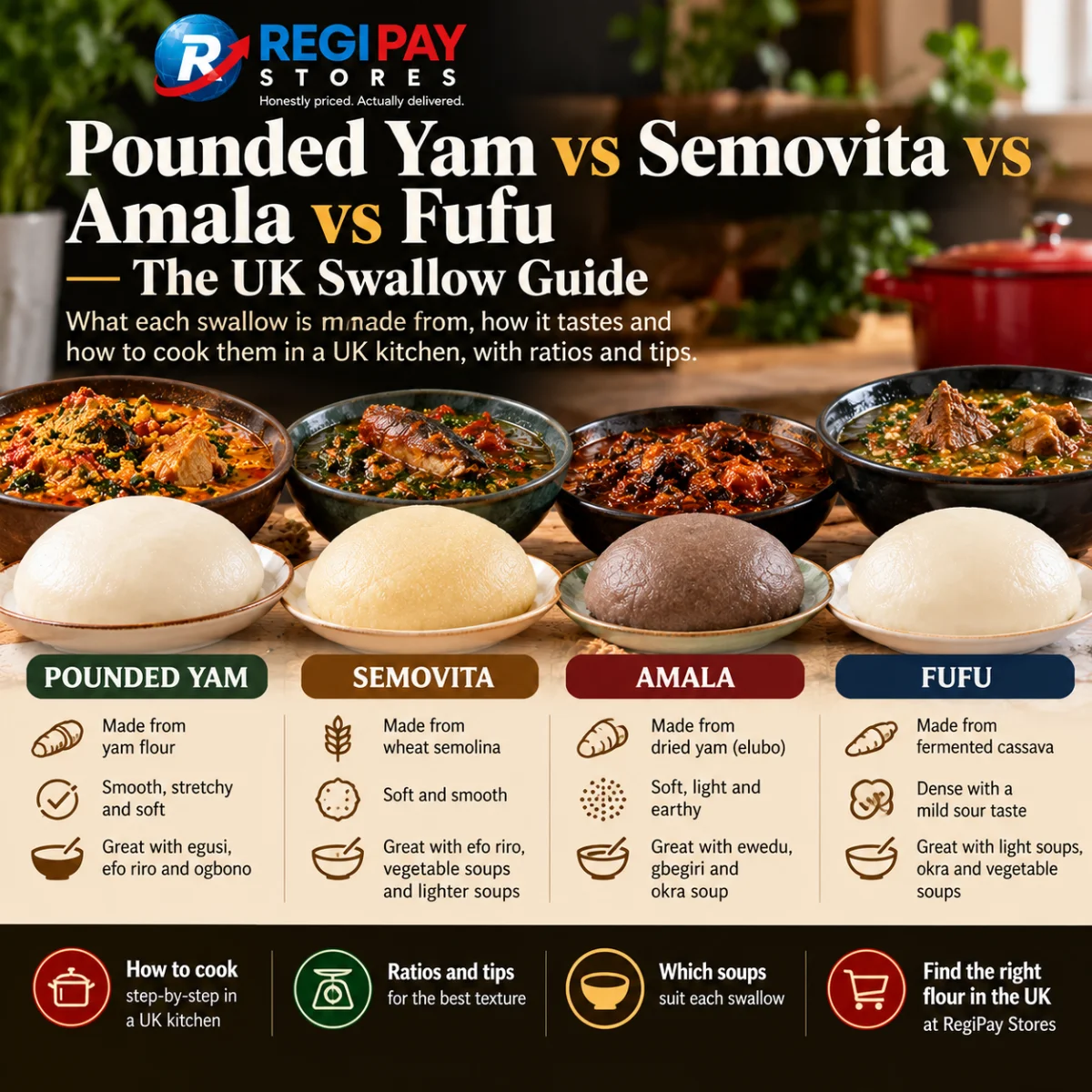
In Nigeria, especially in the south-west, pounded yam (iyan) is traditionally made by boiling white yam and pounding it in a wooden mortar until it becomes smooth and elastic. It is the classic partner for egusi, efo riro and ogbono soup, and for many families it is the dish that says "this is a proper meal".
In a British flat, pounding fresh yam is rarely practical. Good tubers are not always easy to find, the mortar takes up space, and the noise does not go down well with neighbours. That is why most of the diaspora relies on pounded yam flour, often sold as poundo, poundo iyan or poundo yam. You stir it into boiling water, and within a few minutes you have something close to the real thing.
The catch is that not every flour gets you close. Some brands are made almost entirely from yam; others are blends that include other starches. Some are milled very finely and cook up smooth; others are coarser and need more work. Knowing the differences saves you money and disappointment.
What makes a good pounded yam flour
Before comparing brands, it helps to know what you are judging. These are the five things that matter most.
1. What it is made from
Turn the bag over and read the ingredients list. The best pounded yam flours list yam (often written as dioscorea, white yam or dried yam) as the first and ideally only ingredient. Some products sold as "poundo" are blends that include potato flakes, cassava or other starches. Blends are not necessarily bad, but they behave differently and taste less like freshly pounded yam. If you want the most authentic result, look for a short ingredients list led by yam.
2. Fineness of the milling
A finer flour dissolves more evenly and gives a smoother finish with fewer lumps. Rub a pinch between your fingers: it should feel soft and powdery, not gritty.
3. Colour
Good pounded yam flour is usually bright white to pale cream. A grey or brownish tint can be normal for some yam varieties, but it can also be a sign of older stock or poor storage. Whatever the colour, it should look even, without dark specks.
4. Stretch and texture when cooked
This is the real test. Properly made pounded yam should be smooth, slightly elastic and soft enough to pinch, with a gentle stretch when you pull a piece apart. It should not feel sticky, gluey or heavy in the mouth.
5. Smell and taste
Fresh pounded yam flour has a mild, clean, slightly earthy smell. A sour, musty or stale smell suggests the bag has absorbed moisture or is past its best.
The brands you will see in the UK
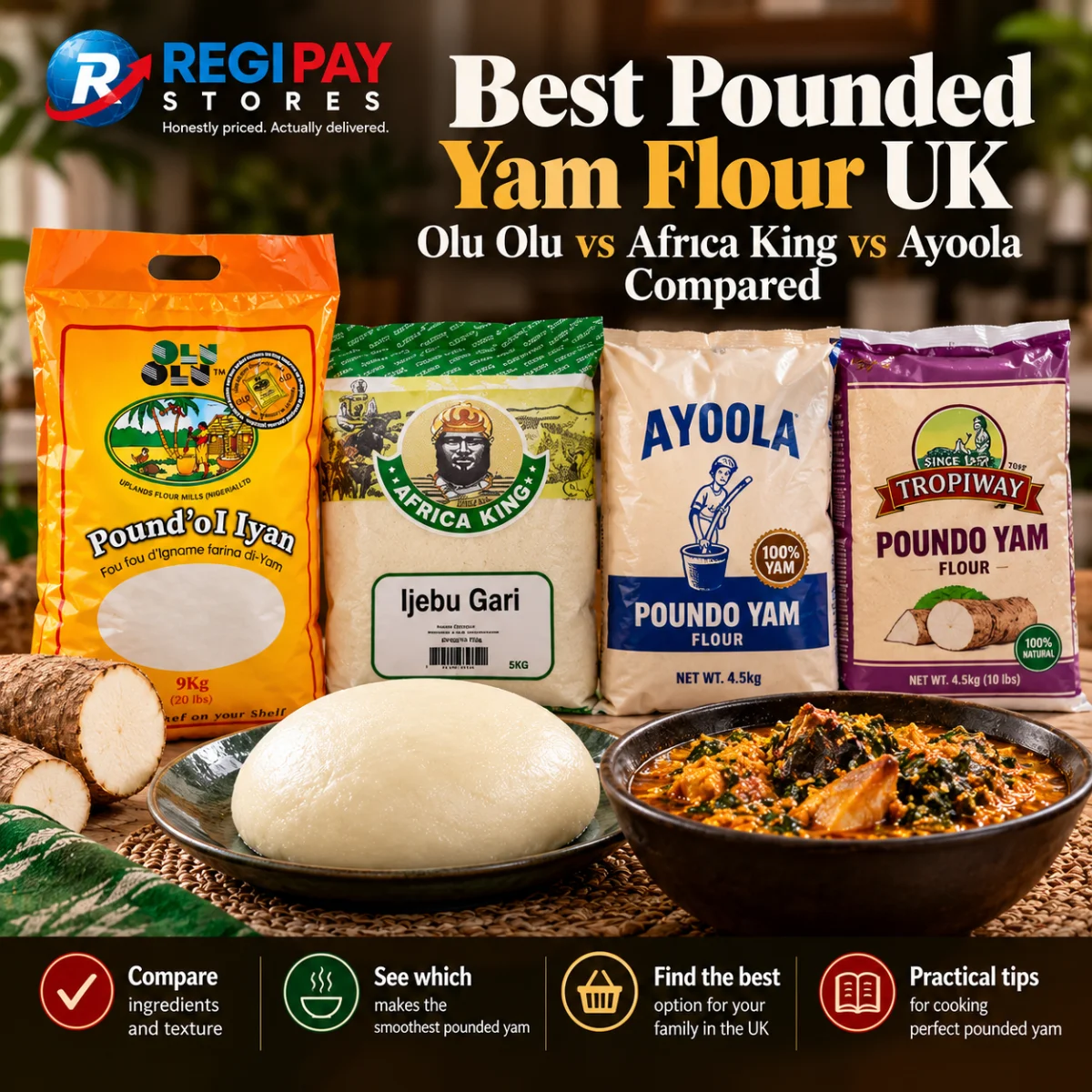
The pounded yam flour market in the UK is dominated by a handful of names. Availability varies by shop and region, and recipes and suppliers can change, so always check the ingredients and best-before date on the bag you are actually buying.
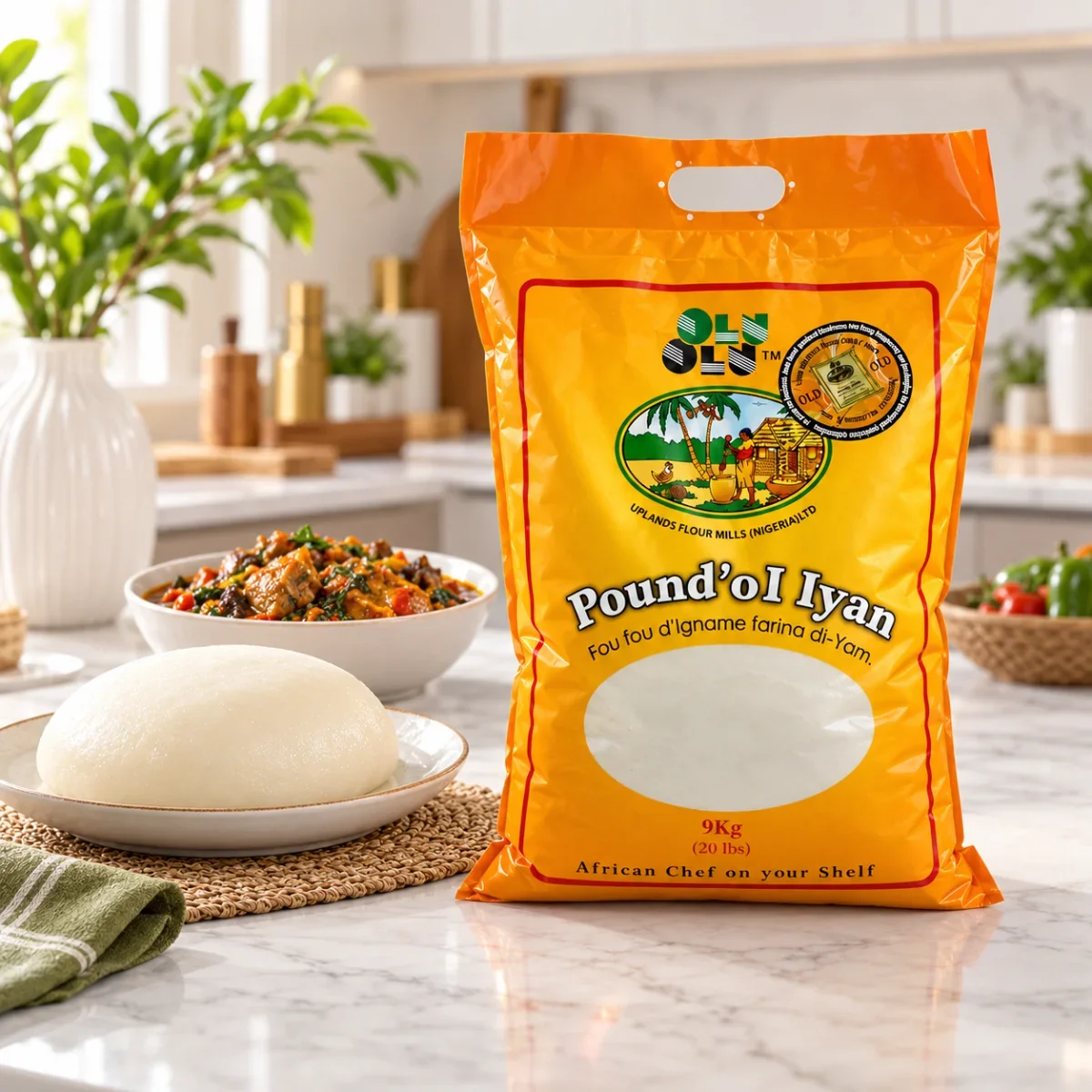
Olu Olu Poundo Iyan
Olu Olu is a familiar name in UK African grocery shops, and its Poundo Iyan is one of the most widely stocked pounded yam flours in the country. It is commonly sold in larger family-sized bags, which makes it popular with households that eat swallow several times a week.
What people tend to like about it is consistency: it is known for cooking up smooth and pale with a familiar flavour, and it is forgiving for less experienced cooks. If you are buying for a family and want a dependable everyday flour, Olu Olu is a sensible place to start.
Best for: regular family cooking, egusi and efo riro, households that buy in bulk.
Africa King Pounded Iyan
Africa King is another brand you will often see in UK African shops and online stores, with its Poundo Iyan sold in both smaller and larger bags. The smaller size is useful if you are trying it for the first time or cooking for one or two people; the larger bag suits families.
Africa King is often chosen by shoppers who want an alternative to the better-known names and like having a choice of bag sizes. As with any brand, read the ingredients list on the pack in front of you, and judge it on smoothness and stretch once cooked.
Best for: trying a new brand, smaller households (smaller bag), or families who want a large bag in the cupboard.
Ayoola Poundo Yam Flour
Ayoola is a Nigerian brand that is well known in the UK and appears in many African grocery stores and online shops, usually in medium-sized bags. Many cooks are already familiar with the brand from home, which gives it a loyal following.
Ayoola is a good benchmark when comparing other flours. If you already buy it, try cooking it side by side with another brand using the method below to see which texture you prefer.
Best for: shoppers who know the brand from Nigeria and want a familiar taste.
Tropiway
Tropiway is better known in the UK for its plantain fufu and other swallow mixes, and it also sells yam-based products. Some Tropiway swallow products are blends rather than pure yam flour, so they are worth reading carefully: they can be a handy option if you like a lighter texture, but they will not taste exactly like freshly pounded yam.
Best for: people who like a lighter swallow, or who want a mix rather than pure yam.
Side-by-side: what to compare when you shop
Because recipes and sourcing can change, the most honest comparison is one you can run yourself. Use this checklist on any bag:
| What to check | What good looks like | Warning signs |
|---|---|---|
| Ingredients | Yam listed first, short list | Long list of starches, yam not first |
| Texture of dry flour | Fine, soft, powdery | Gritty, clumped, damp |
| Colour | Even white to cream | Patchy, grey specks |
| Smell | Mild and clean | Sour, musty, stale |
| Cooked texture | Smooth, soft, gently stretchy | Sticky, gluey, lumpy |
| Best-before date | Plenty of time left | Close to or past date |
Which is best for which occasion?
- Everyday family meals: choose a reliable flour you can buy in a large bag, such as Olu Olu or the larger Africa King bag, so you are never caught short.
- Sunday lunch or guests: pick whichever flour gives you the smoothest result in your own kitchen. Do a test run the week before.
- Parties and owambe: you will be cooking in bulk, so consistency matters more than anything. Stick with a brand you know and buy enough from the same batch.
- First-time cooks: start with a smaller bag so you can practise without wasting a large one.
- Lighter meals: a blended swallow such as some Tropiway products can feel less heavy, though it will taste different.
How to make pounded yam from flour in a UK kitchen
You do not need special equipment. A heavy-based saucepan, a kettle and a sturdy wooden spoon or spatula will do.
- Boil the water. Boil about 500ml of water in the kettle and pour it into a heavy-based saucepan on a medium heat.
- Add flour gradually. Sprinkle in the flour a handful at a time while stirring hard. As a starting point, use roughly two parts flour to three parts water by volume, then adjust.
- Turn and press. When it thickens, press and fold the dough against the side of the pan for a minute or two. This is where smoothness comes from.
- Steam. Make a small well in the middle, add two or three tablespoons of hot water, cover and leave on a low heat for two to three minutes.
- Finish. Stir again until smooth and stretchy. If it is too stiff, add a splash of hot water; if it is too soft, sprinkle in a little more flour.
- Serve warm. Wrap portions in cling film or scoop into balls and keep covered until serving.
For a detailed step-by-step method, see our guide on how to make perfect pounded yam with poundo flour.
Tips that make any brand better
- Use a heavy pan. Thin pans on electric or induction hobs scorch quickly.
- Never add all the flour at once. That is the main cause of lumps.
- Do not skip the steam. The covered rest is what turns stiff dough into smooth pounded yam.
- Store properly. Once opened, decant the flour into an airtight tub and keep it away from the kettle and cooker. British kitchens can be humid, especially in winter, and damp flour cooks badly.
How to run your own brand test at home
If your family cannot agree on the best flour, settle it properly:
- Buy two or three brands.
- Cook the same amount of each using the same water and the same method.
- Serve them side by side with the same soup.
- Score each out of 10 for smoothness, stretch, taste and how easy it was to cook.
It takes one evening, and you will know exactly which bag to buy next time.
Where to buy pounded yam flour in the UK
You will find pounded yam flour in African and Caribbean grocers, in the world food aisles of some larger supermarkets, and from online African grocery stores that deliver nationwide. Buying online makes most sense for the larger bags, which are heavy to carry home.
Whichever shop you use, check three things before you order: the ingredients, the bag size, and the best-before date.
Our recommendation
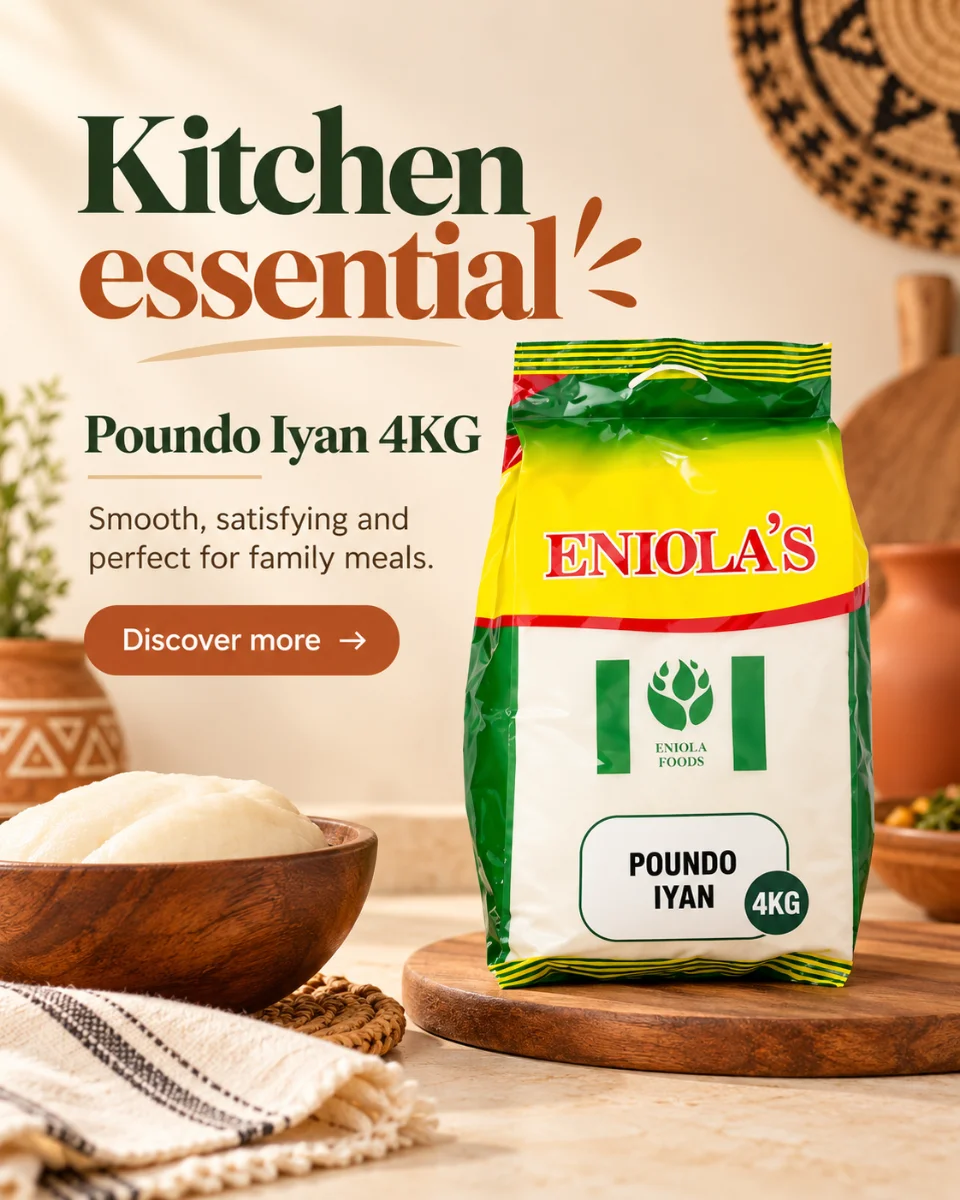
If you want a dependable everyday flour for a household that eats swallow regularly, the Olu Olu Poundo Iyan 4kg is a straightforward choice. If you would like to try an alternative, or prefer a choice of bag sizes, the Africa King Pounded Iyan comes in a smaller and a larger bag. And if you also cook eba, the Garri and Poundo Essentials bundle puts both swallows in one order.